


Recently by Thomas Sowell: Holder’s Chutzpah
Would anyone work to support themselves or their families – and then turn over a chunk of that hard-earned money to somebody else, just because of the words used by that somebody else?
A few people may be taken in by the words of con men, here and there, but the larger tragedy is that millions more are taken in by the words of politicians, the top-of-the-line con men.
How do politicians con people out of their money? One example can be found in a recent article titled “The Autism-Welfare Nexus” by Paul Sperry in Investor’s Business Daily.
Genuine autism is a truly tragic condition, both for those afflicted by it and for their parents. Few people would have any problem with the idea that both voluntary donations and government expenditures are well spent to help those suffering from autism.
“Autism,” however, has been sweepingly redefined over the years. What was discovered and defined as autism back in 1943 is just one of a number of conditions now included as being part of “the autism spectrum.” Many, if not most, of these conditions are nowhere near as severe as autism, or even as clearly defined.
The growing number of children encompassed by a wider and looser definition of autism has been trumpeted across the land through the media as an “epidemic” of increasing numbers of cases of autism. Before 1990, 1 child out of 2,500 was said to be autistic. This year, it is said to be 1 out of 88.
As Paul Sperry points out in IBD, “the number of language disorder cases have fallen as autism cases have risen, suggesting one disorder has simply been substituted for another.”
Having heard, over the years, from many parents of late-talking children that they have been urged to let their children be diagnosed as autistic, in order to get either government money or insurance money to pay for language problems, I am not the least bit surprised by Sperry’s findings.
Every dollar spent on children falsely labelled autistic is a dollar lost – and urgently needed – in dealing with the severe problems of genuinely autistic children. But money added to the federal budget for autism is money that can be given to people, in the expectation of getting their vote at election time.
Another example of words substituting for realities was a front page story in the May 24th issue of USA Today, showing that the official statistics on the national debt only count about one-fourth of what the federal government actually owes. Even the staggering official national debt is literally not half the story.
Under ordinary accounting rules and laws, the money promised to people as pensions when they retire has to be counted as part of the debts of a business or other organization. But, since Congress makes the laws, the trillions of dollars owed to people who have paid into Social Security do not have to be counted as part of the federal government’s debts.
When you or I owe money, we are in debt – and face consequences if we don’t pay up. But we are not the federal government and cannot write our own accounting laws.
Perhaps the biggest frauds committed by redefining words are the many fraudulent uses of the word “poor.”
For most of the history of the human race, there was no problem in defining who were “the poor.” They were people without enough to eat, often without adequate clothing to protect them from the elements, and usually people who lived packed in like sardines in living quarters without adequate ventilation in the summer or adequate heat in the winter, and perhaps also lacking in such things as electricity or adequate sewage disposal.
 Today, most of the officially defined “poor” have none of these problems, and most today have amenities such as air conditioning, a car or truck, a microwave oven and many other things that once defined a middle class lifestyle. Americans in poverty today have more living space than the average European.
Why are they called “poor” then?
For the same reason that autism, the national debt and many other things are redefined in completely misleading ways – namely, to justify draining more money from the public in taxes, expanding the government, and allowing politicians to give handouts to people who are expected to vote for their reelection.
If we keep buying it, politicians will keep selling it.
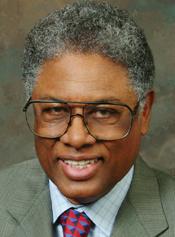
Thomas Sowell is a senior fellow at the Hoover Institution at Stanford University. His Web site is www.tsowell.com. To find out more about Thomas Sowell and read features by other Creators Syndicate columnists and cartoonists, visit the Creators Syndicate web page.

