by Mark Sisson Mark's Daily Apple
Recently by Mark Sisson: I Knew a Change Had To Be Made
A few years back, I wrote an article explaining 17 possible reasons why you’re not losing weight. It was a troubleshooting guide of sorts, aimed at helping people identify some of things they may be doing (or not doing) that’s causing their stalled fat loss. The etiology of obesity and weight gain is multifactorial, and can be complex. Additionally, we’re all unique human beings. So it can be difficult to pin down one simple cause – or even seventeen simple causes. While unwanted fat loss comes effortlessly to most people that eat according to the Primal eating strategy – as the success stories and hundreds of thousands of positive user experiences indicate – sometimes we inadvertently sabotage our best efforts, stray from best practices, or don’t fully grok what we need to do to become efficient fat-burners. So let’s take a look at nine more possible reasons, shall we?
1. You’re engaging in too much mindless eating.
If you asked most people what made them overweight in the first place, it was that sneaky, tricky combination of eating and, well, doing everything else but focus on the food. It’s eating while watching TV. It’s eating while driving (I’ve seen a man eat a bowl of cereal on the 405). It’s eating while cooking (not tasting to stay abreast of the dish; full-on eating). It’s popcorn at the movies. It’s beer and wings and more beer during the game. In other words, it’s mindless eating. Eating that feels like breathing, like something you just do. You take a few chews, rarely enough to qualify as real mastication, and down the hatch it goes, with a follow-up handful close on its heels. Since increased frequency of eating (i.e. mindless eating or snacking) is strongly associated with the United States’ steadily increasing average energy intake, it’s plausible that mindless eating leads to eating more food.
Be more mindful when you eat; practice mindful eating. Eat food with others, sit down to dinner, take the time to appreciate the food you’re eating. Just because you’re scarfing down grass-fed beef and pastured eggs doesn’t mean you can get away with mindless consumption.
2. You’re eating too many “pleasure foods.”
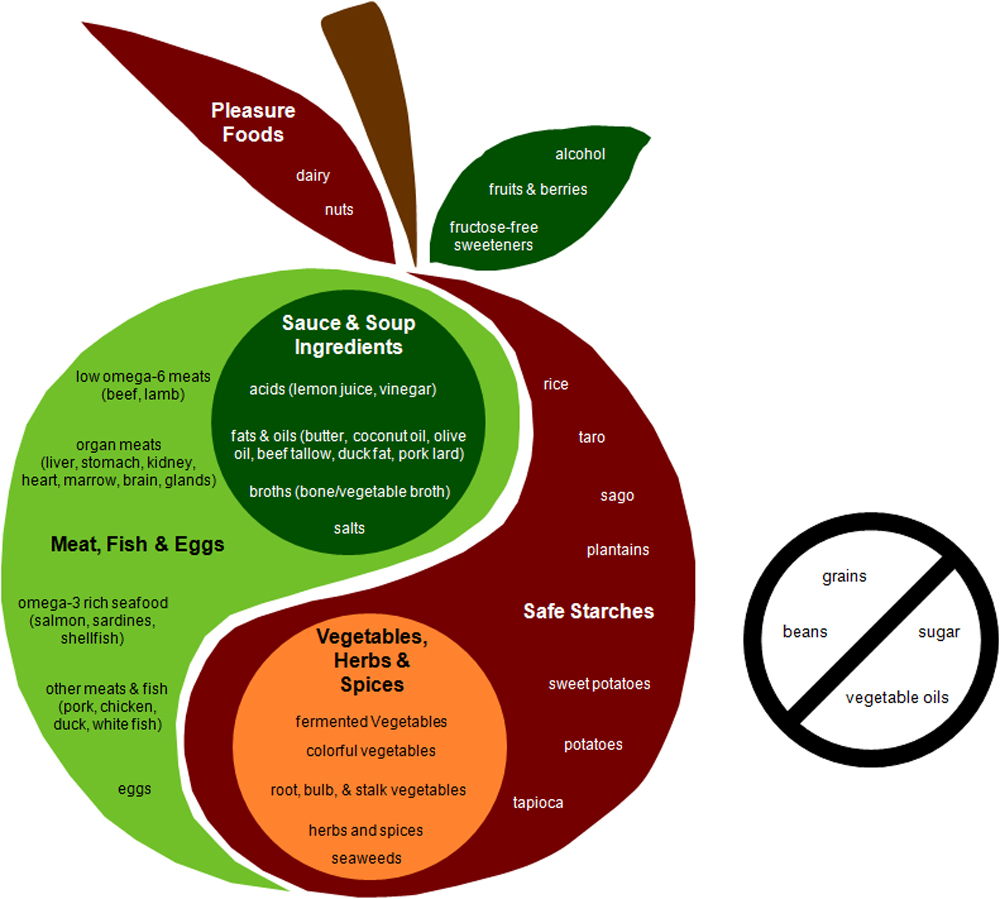
Paul Jaminet really has a knack for coining phrases, doesn’t he (“safe starch,” anyone?)? A lesser known one is “pleasure foods.” These are things like nuts, dark chocolate, and raw honey – all foods that have gotten the stamp of Primal approval in the past, all foods that are calorically-dense and easy to overeat. This is hard to grasp, because these foods also confer some health benefits. Nuts are rich sources of micronutrients like magnesium, vitamin E, and selenium, and multiple studies suggest that nuts help weight loss. Dark chocolate got an entire post devoted to its impressive polyphenol content (and its fatty acid profile isn’t too bad, either), while honey is quite possibly the best sweetener around. At the very least, it and its bevy of bee-related compounds outperform other sweeteners like maple syrup and plain sugar and result in fewer metabolic issues. All that said, these foods are delicious, packed with calories, and can be overeaten, particularly because they have the reputation as “health foods.”
If you’re not losing weight, moderate your intake of these foods.
3. You’re eating too little.
It’s well-established that prolonged dieting – taking in fewer calories than your body expends – will eventually lead to a downregulation in the basal metabolic rate. This is simple stuff, really. Reducing your food intake will lower your body weight, usually, but it’s not a simple matter of dropping them lower and lower as you lose weight. The body isn’t a passive thing that you’re merely adding to and subtracting from. Instead, it’s a living, breathing, reacting, adapting entity that responds to the lowered caloric input by lowering its energy expenditure. Since you can’t lose weight forever (you’re not just going to waste away into nothingness), perpetually lowering your caloric intake will eventually work against your desire to lose weight.
Instead of sitting at a chronic caloric deficit, consider cycling your caloric intake. Eat less one day, more the next. You might also look into periodic refeeds, which may be able to kickstart a stalled weight loss.
4. You’re under “hidden stress.”
In the previous article, I explained how stress can make us gain weight, or stop losing it. Cortisol – which we release as a part of the stress response – inhibits weight loss, catabolizes muscle, worsens insulin resistance, and promotes the storage of fat. Although back then I was referring to the obvious sources of stress in our lives, like bills, traffic, jobs we hate, bosses we hate, relationship strife, there are other “hidden” types of stressors that result in the very same physiological responses as obvious stressors cause. Foremost among the hidden stressors is the lack of nature exposure. In the literature, researchers often speak of “forest bathing,” or spending a day or two or three in a forest setting to reduce cortisol, enhance immune function, and improve glucose tolerance. I prefer to look at this a different way. Instead of nature exposure being a positive anti-stress agent, urban living is an active stressor. Spending a day in the woods is a return to normalcy rather than an “intervention.”
If you’re not doing this already, take a day or two out of the week to get outside, preferably amongst unkempt, wild nature. It needn’t be a forest or a craggy cliff. The beach, the desert, or even a park will do just fine. In a pinch, you can even listen to nature sounds and look at nature scenes on your computer.