


I have lived through three monumental historical events. I remember only two of them.
I do not remember the dropping of the two atomic bombs in August of 1945. As symbols of scientific world transformation, this constituted the most momentous event of the 20th century. This breakthrough, so far, has not led to nuclear war, even though on several occasions, it looked as though nuclear war was a distinct possibility. Nevertheless, the arrival of the nuclear age heralded a transformation of the modern world. We have not yet seen the end of that transformation.
Martin van Creveld, the great military historian in the State of Israel, has argued that the nuclear age ruined the plans of empire for large nations. They could no longer risk a war with each other. Yet spending on empire increased. Today, large states face resistance from non-State groups. The Soviet Union went down when the Afghans beat them by using Stinger missiles. The USSR was an empire, and an empire that loses to insurgents has lost its reason for existence.
We are about to experience a similar defeat in the same country.
There have been two other major events since 1945. I suppose most people would agree on at least one of them: the collapse of the Soviet Union on December 31, in 1991. While the collapse of the Berlin wall in 1989 was the symbolic evidence of the collapse of the Soviet empire, that did not become clear until August of 1991. Historically, there has been nothing to match that disintegration. No empire that large ever collapsed that fast without bloodshed. I was here to see it.
There are old-line anti-Communists who still insist that it was all fake, that it is all a deception, that the Communists are still running the show in Russia. They do not understand the difference between fascism and Communism. The Russian system is fascist to the core: State-run capitalism.
We are now seeing what hard-core liberals always predicted would happen: the economic convergence of the two systems, USA and USSR. The system of economic convergence is fascism. That was what the liberals always wanted, but called it something else: “economic democracy” or “the government-business alliance.”
SEPTEMBER/OCTOBER 2008
The second event that I regard as almost comparable in importance to the collapse of the Soviet Union was the collapse of the American banking system that took place in September and October of 2008.
No one saw that collapse coming in August. The senior rulers of the United States — I do not mean politicians — have watched in horror as institutions that had survived since the mid-19th century went down: investment banks. These were banks that did not take deposits from the general public. They pooled large quantities of capital from private, wealthy investors. Within a matter of weeks, that business model collapsed. The investment banks scrambled to restructure their legal operations so as to be defined as commercial banks and therefore become eligible for the Federal bailout money. Meanwhile, huge commercial banks almost went bankrupt. They did not go bankrupt only because of government intervention and because larger banks absorbed them. Wachovia went down. Washington Mutual went down. The share prices of the two largest banks in the United States, the Bank of America and Citigroup, are still close to penny share status.
Anyone who does not understand the magnitude of what is taking place is an economic ignoramus. I have plenty of these ignorami contacting me, telling me it was all planned by the insiders. The conspiracy has won again! In their worldview, the conspiracy always wins. That is because they believe that the conspiracy has the attributes of God. It is omniscient, omnipotent, and omnipresent.
Here is their intellectual problem. They do not believe in the free market. They cannot conceive of a social institution based on voluntarism that can break the backs of government planners and central bankers. They will believe anything but this. They think of themselves as defenders of the free market. But they do not grasp the power of the free market to enforce consumers’ decisions.
The conspiracy of well-placed insiders is now tottering. The whole structure of the national American political system has rested on the solvency of the largest American banks. These banks have all been called into question. They are now gutted.
The thought that commercial bank insiders actively demolished trillions of dollars of their own equity as part of a conspiratorial plan is so imbecilic, so outrageous, so ludicrous, that I am convinced that these conspiracy worshippers have lost whatever remained of their minds. They have been gutted intellectually, just as the banks have been gutted financially.
Some of them probably think that Communists still run Russia. Ex-Communists do: bureaucrats, mobsters, and KGB agents. But Communism is dead. How do I know? Look at a map of Russia. Look for the old names: Stalingrad and Leningrad. Gone. Maps tell a great deal about a civilization. Russian maps tell us that Communism is dead.
The American conspirators have lost the one thing that they thought they had: control over the nation and the nation’s finances by means of the fractional reserve banking system. That system is coming unglued, just as Ludwig von Mises said it would, just as Murray Rothbard said it would, and just as those other Austrian economists who understand the enormous weakness of the fractional reserve system had said would eventually take place.
I wonder sometimes if there is anything coherent remaining in what is generally called the conservative movement. Do any of these people have a clue as to what has been taking place? We are seeing the disintegration of the fractional reserve banking system all over the world. It is being held together by bailouts, which are the government equivalent of bailing wire and chewing gum.
The only thing holding the whole structure together is an enormous residual faith in the State and a naïve faith that deficits don’t matter. That phrase is associated with supply-side conservatives and the vast majority of those people who call themselves Chicago School economists. Supply-siders said it, and Chicago School economists cautiously chimed in, “Someday, maybe deficits will matter, but not soon. At the margin — this year, next year, and until I am dead — deficits don’t matter.” It has been the Austrian School economists who have warned, decade after decade, that the increase in the Federal debt would eventually threaten the solvency of the government and the stability of the dollar. Now that this is visibly coming true, we still do not hear from professional economists cries of warning regarding trillion-dollar annual Federal deficits. They say nothing, except when they say it is a good idea, because it is necessary, because we have got to save the banks, because we have got to regulate the economy, and, most of all, because the unhampered free market system really does not work. This is what we are getting from people who have generally been known as free market economists. They are lining up as cheerleaders as the banks go to the Federal trough. The Federal deficit soars into astronomical regions, and the monetary base soars just as fast, yet the academic economists are silent. This is not the silence of the lambs; this is a silence of unindicted co-conspirators, most of whom teach in tax-supported universities and spend their careers writing unreadable articles in unread academic journals in order to get tenure, so that the taxpayers can never fire them. These people are apologists for the State. Most of them have been on a public payroll all of their lives. These are the people who, in the name of conservative free-market principles, are supposed to stand in the gap to warn us that the ship of state is going over the falls.
Don’t hold your breath.
WHAT IS TO BE DONE?
What can be done about it? Politically, nothing. The American political system has been soft-core fascist for almost a century. Liberals love to call conservatives fascists. The problem is, the liberals are right. Of course, well-informed conservatives like to call liberals fascists, and they are correct, too. Everyone who believes in the efficiency of the so-called government-business alliance is a fascist.
The fascist State was always an attempt to control private industry by means of inflation, taxation, and regulation. Fascism was always a system of keeping the big boys alive and happy at the expense of the taxpayers. Of course, the faces changed. The system was always one gigantic system of cartels, regulation, and fiat money. It was, in short, everything that the critics of modern capitalism say is wrong with capitalism. This is why John Maynard Keynes wrote this in his Foreword to the German edition of his General Theory (1936).
The theory of aggregated production, which is the point of the following book, nevertheless can be much easier adapted to the conditions of a totalitarian state [eines totalen Staates] than the theory of production and distribution of a given production put forth under conditions of free competition and a large degree of laissez-faire. This is one of the reasons that justifies the fact that I call my theory a general theory.
The modern economic system is one gigantic interlocking system of promised bailouts, beginning with Social Security. In commerce, it is a system designed to keep large producers protected from consumers. It has never been anything else ever since the national political triumph of the Progressive movement in the fateful year of 1912. In that year, the three candidates for President were statists to the core, all followers of the Progressivist doctrines, all advocates of central banking, and all happy to see the Federal government expand control over business throughout the country, and throughout the world.
This is not the story we get in the history textbooks, because the textbook writers love what was done in 1912 and subsequently. The public school system has taught that this was the salvation of capitalism ever since.
We are now seeing the unraveling of the entire system, all over the world. Whatever happens from this point on, economic production will be hampered by ever-increasing regulation. The government is now intervening to save the banks, which means that the banks are beholden to the government.
President Obama has said that senior bank officials are not going to be able to receive more than $500,000 a year. They are not going to get money from stock options until the government gets its money back. I think this is great. My only regret is that he didn’t say it was $250,000 year. Or maybe $100,000 year. Or maybe about $50,000 a year. Let them live in New York City on that! The whole crew should resign and go into some decent line of work.
Fractional reserve banking has been a con job from the beginning. Rothbard and Mises pointed this out, and they were hated for it. The economists trust bureaucracy. They trust people with Ph.D.’s, just like themselves. But, except at the Federal Reserve, the agencies are run by lawyers and by appointees who hope to get a fat lobbying salary when they leave the government. Why should we think that a bunch of Harvard- and Yale-educated lawyers, who were recruited by New York City banks that were always protected by the Federal Reserve System, would have any idea of how to run an economy? We now know how well they could run the economy. They stripped off million-dollar bonuses for running the system over the falls.
Is not going to get much better. The banks are gutted. The best and the brightest graduates will not be going to go into banking for as long as there is a $500,000 cap on salaries, if Obama gets his way.
As far as I am concerned, the pay cap should be forever. And when the bank-created inflation comes, the government should not change this salary cap to let them benefit by getting a cost-of-living escalator clause. Their predecessors knew how to get rich under a manipulated currency. A far as I’m concerned, their replacements should get poorer the same way.
For over a century, the best and the brightest of the students graduating from the senior universities of the country have been recruited into big government and fractional reserve banking. In other words, they relied on coercion to get rich personally and to direct the growth of American capitalism. They got rich, and capitalism grew, but it grew in terms of malinvestments. It grew because the fiat money was used to lower interest rates, and these lower interest rates led to malinvested capital. Mises showed how this system operated as early as 1912.
Ever since September of 2008, we have seen the fruits of the fiat money roots that Mises warned against almost a century ago. But modern free-market economists are as hostile to Mises’s theory of the business cycle as they were hostile to Mises’s theory of the economic irrationalism of socialism . . . until the Soviet Union fell. Then, they got religion, but they still never mention Mises. It was as if he had never lived.
Mises? Who is Mises? Yes, the Soviet Union went bankrupt. We didn’t think it would in 1986. Except for that lucky guesser Judy Shelton, nobody predicted that it would. We told people that the Soviet Union had remarkable economic growth. Yes, it turned out that the Soviet Union was nothing but Bangladesh with missiles, just as journalist Richard Grenier said in the 1980’s. We did not see this at the time. Still, we will take credit for its collapse anyway: the new capitalism defeated it. We will continue to praise the regulated fascist economy that the United States has been over the last hundred years, and call for more of the same. We love economic efficiency, because efficiency lets the State get larger. When people get richer, they can pay more taxes.
This is why academic economists are demanding even more Federal spending to bail out the banks and the other institutions associated with high finance. Almost to a man, they are saying that the bailouts are necessary. Why? Because they have been great proponents of the mixed economy ever since John Maynard Keynes wrote The General Theory in 1936. More than this: ever since the real mentor of American fascist banking, Irving Fisher, back in 1911.
Fisher almost went bankrupt in the Great Depression, yet he is still revered as the greatest economist in American history. He was a fiat money man from day one. He believed that the government and the central bank could control the economy by means of monetary policy. He was the great apologist of the corrupt monetary system which we now suffer from. An academic, he was the high priest. Milton Friedman was little more than an acolyte to Irving Fisher on the money question.
NOMINAL RECOVERY
There is real recovery and nominal recovery — recovery in terms of rising prices. Rising wages and rising prices give the illusion of prosperity.
Always in the past, there has been a recovery after a recession. Always in the past, the bailouts have worked to cover up the underlying malinvested capital. Always in the past, the Federal Reserve has inflated, and the economy revived.
This economy will revive, but it will revive on a new basis. It is no longer possible for someone who understands Austrian School economics to look at this economy as anything remotely resembling a free-market economy. At the very core of the free-market economy, as Mises said in 1912, is the monetary system. That system is now completely and openly run by a cartel that is now trapped by the Federal government. The Federal Reserve System is soon going to have to bail out the Federal government. The Federal government is bailing out the commercial banks, and if the Federal government cannot bail out the banks, the Federal Reserve has got to do it directly. In either case, the banks are busted. The capital is gone: wasted. The money is still in people’s bank accounts, but the fiat-money-funded projects have turned out to be losers. The skyscrapers are empty. The recovery is going to be a nominal recovery, based on the digits known as dollars. These digits are going to be produced in such massive quantities that prices will shoot up as never before in peacetime America. It is going to be the destruction of the dollar.
 Austrian School economists have been predicting this for years, but now we have the Federal Reserve on our side. We can look at the adjusted monetary base, and we can see what is going to happen. Unless the Federal Reserve System raises the reserve requirement, thereby undermining the profitability of the entire banking system, and thereby busting hundreds of banks, including some big ones, the adjusted monetary base is going to be translated into real money. That real money is going to get spent. When it gets spent, it is going to raise prices.
We are seeing the culmination of a century of bad economic policies. Academic economists never sounded the alarm after 1936. They did not sound the alarm because they are the paid agents of the State, certified by earlier generations of paid agents of the State. The State has paid for the services of these men and women, and they perform accordingly. They understand the fundamental rule: “When you take the king’s shilling, you do the king’s bidding.”
The next college-level economics textbook that exposes the Federal Reserve System as the commercial bank cartel’s enforcement arm will be the first one.
There is no academic hue and cry against the massive deficits of the Federal government and the massive bailouts by the Federal government. Economists are silent because they have been cheerleaders for the Federal Reserve System from day one. For these people, the Federal Reserve can do no wrong today, because it did wrong from 1929 to 1933, and Milton Friedman exposed this for all to see. What was a great evil of the Federal Reserve during that period, according to Friedman? It did not inflate to offset the contraction of money due to collapsing banks.
Friedman hated free market banking. He disparaged the gold standard. He believed in government control over money. At the core of the free market is money. At the core of Friedman’s economics was the State. He just wanted to make the State more efficient.
The academic economists never mention the fact it was the expansionary policies of the Federal Reserve during the 1920’s that led to the collapse of the banking system in the early 1930’s. The FED had been set up so as to prevent any such collapse, and yet that collapse was the worst collapse in American history. Then what is the right approach? What do the economists say should be done? Give more power to the Federal Reserve System. That is exactly what has been done over the last five months, and the academic economists cheer.
The academic economists say that things will recover. They tell us that it will again be business as usual. They tell us that once we get through this crisis, the American economy will boom once again. They believe in the fascist economy. They believe that government regulation is better than the free market. They believe the government-run, bankruptcy-protected banks, which we now openly have, are better than private, profit-seeking institutions that are not protected by a government-created cartel called the Federal Reserve System. They believe in fascism, and they are going to tell you that everything is fine as the fascist State extends power over every aspect of our lives.
BROKEN PROMISES, WANING FAITH
Do I see this as the end of freedom? No, I see it is the end of the fascist State. The monstrosity came close to going belly-up last October. It is on its last, tottering legs. It has lost respect of the public.
The politicians are even convinced the banks were run by a bunch of corrupt, self-serving men, which was in fact the case. What government-protected industry isn’t? But that was not why the bankers lost money. They were lured by Alan Greenspan’s policies of easy money and low interest rates into believing that the boom was real, and that they could leverage themselves 30 to one or 40 to one and get paid for their wisdom. They were high-paid suckers. The Austrian School economists warned all through the period that this was going to happen. We were all dismissed as cranks.
As the Internet grows in its influence, alternative views can get to a minority of educated people. The success of the Ludwig von Mises Institute in getting Austrian School economics in front of hundreds of thousands of young people, all over the world, who would never have heard about Mises or Rothbard had it not been for the World Wide Web, indicates that the foundations of the modern fascist economy are being undermined where it counts, which is in the minds of bright people who are no longer buying into the system.
In the long run, Keynes was right: the economic policies of politicians today are based on the writings of some obscure economist in the past. Those two economists were Irving Fisher and John Maynard Keynes. Their world is now toppling. Through their disciples, they are like a pair of drunks staggering along, holding up each other. Keynes wanted deficit spending. Fisher wanted a banking system that would cover these deficits.
 The money from the central banking system funds the Treasury, and the Treasury in turn bails out the big commercial banks — no longer nearly so big. Everything is based on a daisy chain of digits. Meanwhile, unemployment is rising, production is falling, fear is spreading, loss of faith is spreading, and tens of thousands of formerly highly paid specialists in finance are looking for jobs. This is not a matter of a conspiracy; this is a matter of the free market finally voting no against the conspirators.
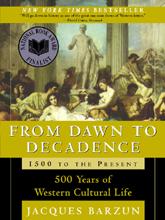
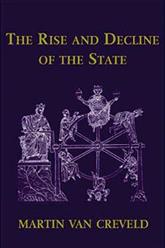
There are conservatives who think that all is lost because of the conspiracy. These are people who never did anything anyway. They do not see that we are at the end of an era. We are seeing the culmination of a 500-year era. Jacques Barzun titled his great history of this era, From Dawn to Decadence. We are seeing what Martin Van Creveld called the fall of the state, meaning the nation-state.
These scholars agree: we are seeing the bankruptcy of every Western government that has made too many big promises to too many voters regarding free healthcare and guaranteed retirement. All of it will collapse. The tatters of the promises will point to the tatters of those who made the promises — politicians — and the tatters of the system that supposedly was going to guarantee delivery of the promises.
The academics still believe in the healing power of the State. The voters still believe this, too. But voters are catching on more rapidly than the academics that the State is running out of wiggle room. Millions of voters have figured out that they are going to get stiffed. They don’t know what to do about it, but at least they understand that they really are going to get stiffed.
The academics say “no.” They keep telling all of us that everything is okay, that a few more trillion-dollar deficits will solve the problem. The doubling of the monetary base in 2009 will have no more disruptive effects than the doubling of the monetary base did in the second half of 2008. They tell us all this, but the public is either oblivious, or else is growing suspicious. We will have another round or two of centralized government, and probably more than one or two rounds of increased monetary expansion. But what we will not have is a restoration of anything resembling the financial world that existed prior to September 2008. That world is gone. The insiders will not get it back. They may get an imitation of it, based on fiat money that does not buy very much, but they will not see the world of 2007 restored. The power base of the modern fascist State is unraveling rapidly.
 This is why it is important for you to preserve your assets by not believing the official assurances. Put your money where the experts tell you that you should not put your money. You should take your money out of those segments of the economy into which the experts say you should put your money, and will soon boom. They have ignored the fact that the stock market has been a losing case since March of 2000. They would not admit it then; they will not admit it now. Anybody who bought and held a portfolio of indexed American stocks in March of 2000 has lost well over half of his money. Investors will learn, even though academic economists will not.
CONCLUSION
What I am saying is this: this time it’s different. This time, the fractional reserve banking system has shot its wad. It is begging for ever-larger handouts from the Treasury Department, which needs central bank fiat money to bail out the economy. The public is accepting this grudgingly, and the academic economists are cheering, but the reality is this: this time it’s different. You had better adjust your portfolio, your career plans, and your retirement plans accordingly.
February 7, 2009
Gary North [send him mail] is the author of Mises on Money. Visit http://www.garynorth.com. He is also the author of a free 20-volume series, An Economic Commentary on the Bible.
Copyright © 2009 LewRockwell.com

