


Recently by Gary North: Obama’s Second Inaugural Address: An Unofficial Translation
Jim Wallis is the most terminally naïve public figure I have seen over the last 45 years. Nobody else comes close.
Every year, he gets invited to the World Economic Forum in Davos, Switzerland. It is the annual meeting of the richest and most powerful people on earth.
Why do they invite Wallis? Wallis is a left-wing Democrat political activist who operates under a nonprofit umbrella that is devoted to one primary goal: to get the federal government to increase taxes on the rich and the upper middle class in order to hand over money to the poor. Its secondary goal is to persuade fundamentalists and evangelicals that they must devote time and money to electing Democrats and liberal Republicans who will then vote these welfare state proposals into law.
Why is this naïve? First, because he assumes that the federal government has ever been interested in helping the poor. Politicians say that they want to help the poor, but in the entire history of the federal government, the poor have rarely been helped at all. The poor do not vote as a bloc. In fact, they barely vote at all. They have no money, so they do not give to political campaigns. Therefore, the welfare state has always concentrated on helping the middle class. It does so in the name of helping the poor, but in fact it helps the middle class, because that is where the votes are.
The federal government spends lots of money on supporting university education, which means that it spends lots of money supporting upper-middle-class tenured professors to do research that is basically irrelevant to the market or anybody else. But it gets them tenure. These universities are filled with middle-class and upper-middle-class high school graduates. The poor rarely show up. If they do, they flunk out, or else they run out of money.
Social Security and Medicare are the two largest absorbers of federal welfare funds. This money goes to middle-class people for the most part. The only large amount of money that goes to the poor is Medicaid.
Jim Wallis is not talking about more Medicaid funding; he is talking about across the board welfare funding for tens of millions of poor people. The federal government has never been interested in that, and what little money did go in that direction Bill Clinton stopped in the late 1990s. As he promised, he ended welfare in America as we have known it. That was Clinton’s main legacy, other than his impeachment, but Jim Wallis rarely or never mentions it.
But what about food stamps, meaning food charge cards? Isn’t this money a subsidy to the poor? Food stamps for the poor are like ethanol for conservationists: excuses to fund agribusiness.
Second, his other life’s work, namely, persuading fundamentalists to adopt the social gospel, is about as futile an effort as you can imagine. The social gospel never had anything to do with the teachings of Jesus, and American fundamentalists, Pentecostals, and evangelicals have been trained in churches that explicitly rejected the social gospel. They are in churches that never joined the old Federal Council of Churches, and have not joined today’s replacement, the National Council of Churches. In other words, his supposed target audience either is never heard of them or thinks he is a crackpot. They think he is a liberal agitator, which is exactly what he is.
So, Wallis has spent his entire life in a two-part campaign devoted to utter futility. The federal government pays no attention to him, and the fundamentalists pay no attention to him.
What he does not want to admit is that upper-middle-class liberals are the only people who pay any attention to him. These people run the media, and they trot him out as the faithful lapdog of the humanist left whenever they want to get a supposedly Christians opinion on the latest federal boondoggle. He dutifully supplies the opinion, and then disappears once again into the nether regions located somewhere between the shrinking mainline Protestant denominations and the growing evangelical and Pentecostal churches, which pay zero attention to him.
You can learn more about him here.
THE ROCKEFELLER STRATEGY
This weekend, he has achieved a degree of naïveté which pales in comparison to anything has ever done. The richest people in the world, who are meeting at their annual enclave at Davos, Switzerland, brought him to be on a panel. He is the vice chairman of the panel of leftists. This panel is devoted to promoting a manifesto. Well, maybe it’s not exactly a manifesto. It’s more like a committee position paper.
Rich people pay no attention to position papers issued by upper-middle-class liberals who work for nonprofit organizations. They write a few checks once in a while, just to keep these people on a short leash. It is a short leash indeed.
Let me tell you how it works. David Rockefeller is a master of this, and he learned it from his father, John D Rockefeller, Jr. When Junior took over the Rockefeller foundation in 1917, he already knew what he had to do. The family had gone through the infamous Ludlow massacre in Colorado in 1914. Armed guards hired by a mining company that was owned by the Rockefeller Empire fired on women and children. Also involved was the Colorado national guard. The women fled into a tent, which caught fire. Eleven women and two children died. They were the wives and children of striking miners. Others died in the confrontation. Something like a war broke out. Over the next ten days, dozens more miners were killed. The bad publicity forced Junior to take action.
Junior took effective action. He hired one of the two founders of public relations, Ivy Lee. (The other founder was Sigmund Freud’s nephew, Edward Bernays, who is far more famous.) Lee was a liberal Protestant. In 1921, he was one of the founders of the Council on Foreign Relations. He told Junior what to do: admit full responsibility, go to Colorado, shake hands with union members, and tell them he was terribly sorry. This is exactly what Junior did, and it worked. It was one of the most successful public relations campaigns in American history. He de-fused the strike.
Junior was a liberal theologically and politically, and he knew how to spend his various foundations’ money. So did Ivy Lee, who advised many of the super rich in that era. Rockefeller used a tiny portion of that money for the next four decades to buy off academics and leaders in the media. He would hand out enough money to show that he really cared, and they kept their mouths shut. There was no written agreement that they keep their mouths shut, but they did. He literally bought off the American academic establishment in the social sciences. (There is a book on this: Don Fisher: Fundamental Development of the Social Sciences: Rockefeller Philanthropy and the United States Social Science Research Council [Ann Arbor: University of Michigan Press, 1993].)
If you want to know why the large foundations on the Right in the United States never say a word against the Rockefeller interest, it is because David Rockefeller sees to it. The Rockefeller Foundation sends relatively small checks in the range of $50,000 a year to these organizations. For him, it is chump change. For them, this is a large donation. He does not tell them to shut up; nevertheless, they shut up. He has been doing this for 40 years. It has worked as well for him as it worked for his father for 40 years.
DAVOS: WHERE THE ELITE MEET TO EAT
Every year, the richest people in the world gather in Davos, Switzerland. The story of these meetings is featured in the book by David Rothkopf, Superclass. The author claims that the money personally owned or directly controlled by the 6,000 people in the superclass equals the wealth owned by the bottom 3 billion people in the world. I do not know if this figure is correct, but it is close enough for New World Order statistics.
This year, they invited Wallace to come to serve on a panel that would present a document calling for the transformation of world corporations and world politics. Understand, these people control the largest corporations in the world. They really are the superclass. They are the ideological targets of Jim Wallace in his utopian colleagues. Yet Wallis enthusiastically flies off to Davos every year, as if he were a player. He is what Lenin used to call a useful idiot.
The people at Davos have an agenda. That agenda is to keep power and enormous wealth by means of government intervention. Wallis believes that the governments which these people control should give more money to the poor. These governments give money to the poor in the same way that Junior gave money to the poor from 1917 until his death in 1960. His father adopted a strategy which is the ultimate model of the nature of the con game involved. He handed out dimes to children. It is not clear that Ivy Lee recommended this policy. It is often said that he did. Probably, he did not. The old man was savvy. He handed out a few dimes, got a lot of publicity in the newspapers, and that was the end of it. This is exactly what the people who come to Davos do. They invite their ideological enemies to speak in a little room. They invite them to issue a manifesto. That buys off the critics. It makes them believe that they have become players. It makes him believe that they have entered the inner circle. In fact, they are simply front men for the ideological, financial, and political enemies who show up at Davos every year.
They invite him every year. He was there in 2008. He was there in 2009 He was there in 2010. He was there in 2012. He gets to rub shoulders every year with the high and mighty.
There is always a price to be paid by those invited into the outer court of the temple of power by the high and mighty to rub shoulders with them. The price is this: loyal opposition. Teamwork. Here is the offer: “You can help change things from the inside.” As George Gobel used to say in the mid-1950s, “Suuuuuure, you can.”
Wallis sent out a glowing e-mail this week telling of the wonderful opportunity that he has had in participating in the writing of a position paper. The article was called, “The Call for a New Social Covenant.” He made it sound as though the rich and famous were paying attention to him and his fellow salaried employees of small nonprofit organizations.
They aren’t.
This week at the World Economic Forum in Davos, Switzerland, we are looking to the future and asking “what now?” At a Saturday session – “The Moral Economy: From Social Contract to Social Covenant” – a document will kick off a year-long global conversation about a new “social covenant” between citizens, governments, and businesses. This is really “a call” for worldwide discussion about what values are needed to address the many difficult challenges and choices the world is now facing. Inequality, austerity, retrenchment, constraints, mal-distribution, growing conflicts over resources, and extreme poverty all raise questions about our values.
“A new social covenant”: This sounds vaguely familiar. Ah, yes. I remember. A year ago, Wallis wrote a piece for the Huffington Post: “Bad Behavior at Davos.” It began:
Davos, Switzerland – The contradictions here are enormous. Many of the wealthiest people in the world are here – and the most powerful, including heads of state. Yet there is more and more talk about values, even a yearning for them, especially in the wake of this economic crisis, which most here now believe was also a crisis of values. There is more sincere talk of the common good.
I am right now listening to a panel on “The Social Contract” and there is much encouraging talk about company’s responsibilities to society and even the common good – “doing good while doing well” and all that.
But what there has not been much conversation about is what we do when rich and powerful people and institutions act against the common good.
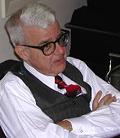 Indeed, there wasn’t. And there never will be. We would expect attendees at Davos to discuss such matters in the same way that we would expect an assembly of vegetarians to discuss the health benefits of cannibalism.
For example, this economic crises was not caused by all “the corporations” or even all “the banks.” It was a crisis sparked by about six banks! Particular bank leaders from particular banks made some risky, short term, selfish and greedy decisions. So how do we name that, and them, and tell them they need to change their behavior, or hold them accountable for it and make new rules and, yes, laws that don’t let them do it again.
Unless all our talk about “values” changes bad behaviors, we are just talking.
This sentence would serve as an accurate tombstone marker for Wallis: He talked and talked and talked.
January 26, 2013
Gary North [send him mail] is the author of Mises on Money. Visit http://www.garynorth.com. He is also the author of a free 31-volume series, An Economic Commentary on the Bible.
Copyright © 2013 Gary North

