


Recently by Gary North: Stalin Committed No Crimes, Says Obscure Tax-Funded Professor
On January 7 of this year, I wrote an article on the idealism of younger voters who flocked to Ron Paul’s campaign for the Republican Party’s nomination for President. It is posted here. My opinions have not changed. I am convinced that there is a bond between him and voters who are 60 years younger than he is. I can think of no other nationally known American politician in history who has bridged this gap, but with only a minority of hard core voters, ages 30 to 77, in between.
This has something to do with bills that are coming due. The younger voters are expected by the older ones to “pay their fair share.” This means staying in the multiple Ponzi schemes that constitute modern politics all over the West.
The oldsters today expect younger workers passively to pay all of the bills that were run up by politicians in the name of voters who got into these schemes early. But the younger voters will not comply. They can’t. The bills are too large. All Ponzi schemes die. They are actuarial impossibilities. Uncle Sam is really Bernie Madoff, but on the scale of hundreds of trillions of dollars, not a piddly $50 billion.
For now, the politics of guilt keeps younger workers paying into the schemes. Younger voters have the votes to kill off these schemes, but there are two crucial missing factors: (1) personal economic pain sufficient for them to consider cutting off these programs; (2) an understanding of a moral philosophy that justifies this decision to kill the programs.
Ron Paul’s philosophy of non-interventionism at home and abroad is the moral philosophy most suitable to an age-based, non-violent, political revolution. Think of it as this: a revolution of pulling the Ponzi schemes’ plugs.
Note: this is not just an American political scenario. It is universal in the West.
Ron Paul’s influence has already crossed national borders. His foreign policy is clear: “The United States government should leave foreigners alone.” This message appeals to foreigners all across the globe. But this raises a question: “Why does he hold this view?” The answer: the philosophy of non-interventionism. Some foreigners then draw a correct conclusion: “This principle crosses borders.” The philosophy spreads.
Ponzi schemes appeal to older voters, who have paid individual pittances into them and want collective fortunes out of them.
For as long as young people do not look at the economics of Ponzi schemes, they go along with them. But, deficit by deficit, reality intrudes. The systems are going broke. If the government funds them forever, younger voters will go broke. Today in Greece, Spain, and Portugal, the only factor that keeps young voters from being expropriated by these Ponzi schemes is unemployment. Half of them can find no jobs. They have no futures under the present regimes. They are beginning to figure this out.
But they do not know why they are locked out. They have never been taught free market economics. Their teachers in tax-funded schools had no incentive to teach free market economics, for free market economics helps people to understand and identify Ponzi schemes.
The reason why Ron Paul’s message crosses the Atlantic is because of three things: (1) he has identified the Ponzi schemes, (2) he has called them into question morally and statistically, and (3) the Internet.
THE POLITICS OF “NO”
Ron Paul’s politics was always a package deal. It was the politics of “no.” It rested on two assumptions: (1) the principle of non-intervention; (2) the obligation to vote “no” if the proposed legislation was not authorized by the U.S. Constitution. Simple. Direct. Easily understood. Universally ignored.
Ever since 1865, there have been only three elected Washington politicians who held this position: Ron Paul, President Grover Cleveland, and Congressman Howard Buffett (Warren’s father).
The politics of “no” is a self-conscious reversal of all politics. Traditional politics is based on the practice known as logrolling. A politician approaches a colleague. He promises to vote for the colleague’s bill if the colleague will reciprocate. The two bills must be non-controversial in each man’s district. But most bills are. There are thousands of them introduced in every term of Congress. This is the politics of “yes.”
Ron Paul reversed the arrangement. He refused to vote for boondoggles introduced by his colleagues. In return, he never has asked them to vote for boondoggles for his district. He never introduced boondoggle legislation for his district. This arrangement had not been heard of ever since Howard Buffett left office in January of 1953.
The politics of “yes” is based on this justification to the folks back home. “I will bring home the loot.” The politics of “no” is based on this justification to the folks back home: “I will keep out the looters.”
The politics of “yes” is the politics of guns in people’s bellies, either to stop them from doing something or to force them to open their wallets. The politics of “no” is the politics of having the government’s agents put their guns back in their holsters.
THE FIRST TERM: 1976
He entered Congress late in the term of a Democrat who had resigned to take a position in the federal bureaucracy. He entered in April of 1976. He was defeated that November by 268 votes out of 180,000.
In that brief stay in Congress, he gained the nickname, “Dr. No.” In short, word traveled fast. The villain of the first James Bond movie of 1962 was Dr. No. No one viewed Paul as a villain, but the moniker stuck.
I was Dr. No’s Dr. No.
He hired me in June to write his newsletters. Most congressmen had a newsletter. They would send out a monthly letter. I was in the newsletter business: Remnant Review. I recognized that his name needed to be in front of voters once a week. So, I created two letters, each sent every other week. One was one page, 8×10, two sides. The other was four pages, 11×17, folded.
I never told him what I would write. As far as I know, he did not proofread them. He trusted me not to get him in trouble, either factually or ideologically. He did not worry about what voters would think. He only wanted to be sure that what was in those letters was consistent with his stated philosophy of non-interventionism and Constitutionalism.
There were voters who complained in writing about his hard-core positions in the newsletters, but nobody ever complained that he was going down the road to compromise.
I have only three regrets. This first one occurred to me only last month. We never had a photo of the staff. This second one only occurs to me as I write this report. I never saved copies of those newsletters.
The third, however, has bugged me for over 30 years. I never saved a copy of the first and last position paper I wrote for him, when he voted “no” on additional American funding for the International Monetary Fund (IMF). I arrived on Friday for my first day on the job. I was told it had to be written for submission on Monday morning. I began to write it on Friday. I came in on Saturday to finish it. It was printed the following Wednesday. Congress voted overwhelmingly to fund the IMF.
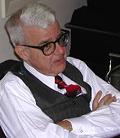 There was one odd after-effect of that position paper. In what simply never happens, the Senate Banking Committee, under Senator Proxmire, invited Dr. Paul to testify as to why he planned to vote against the bill. The Senate pays no attention to the opinions of Congressmen, let alone the junior member in terms of seniority. My guess then, as now, was that Proxmire really did want to know why anyone would vote against the IMF. It seemed inconceivable to him.
With the IMF trying to bail out the collapsing European banking system, using American capital as collateral for the loans that it is trying to raise, we know how things have turned out. Paul was right in 1976. Proxmire was wrong. The IMF remains a far larger “golden fleece” than the clever but peripheral examples of government waste that Proxmire used to feed to the press with fanfare every month: his Golden Fleece Awards.
November 17, 2012
Gary North [send him mail] is the author of Mises on Money. Visit http://www.garynorth.com. He is also the author of a free 31-volume series, An Economic Commentary on the Bible.
Copyright © 2012 Gary North

