

Recently by Gary North: Legacy Builders
In my previous report, I surveyed the contributions of five men. I discovered two principles that undergirded the careers of all five: stick to your knitting, and stick to your guns.
Any person who has as his goal in life to change the opinions of other people had better be committed to both of these principles. First, most people do not want to change their opinions. To change a single opinion requires you to change your opinions on numerous topics. The old rule is true: “You can’t change just one thing.” So, there is a high cost of rethinking your most cherished opinions. People avoid projects that involve high costs.
When someone is confronted with a new opinion, if the opinion relates to how people ought to act, one of the first defenses that the listener can raise is this one: “Does the person recommending the new idea live consistently in terms of this idea?” If it is obvious to the listener that the person does not walk the talk, it becomes clear to him that the promoter is not really serious about the truth and effectiveness of whatever it is that he is promoting. This gives the listener an easy way out.
This is why the people I have selected for this series all manifested a commitment to living in terms of the ideas which they promoted. They were shaped by these ideas. This made it difficult for people who heard these people present their case to dismiss the new ideas automatically.
HANS SENNHOLZ
Hans Sennholz was one of the four men who was granted a PhD in economics under the guidance of Ludwig von Mises. Mises did not have an academic position in Austria at the University of Vienna, except as a private instructor. He did teach at the Graduate Institute of International Affairs in Geneva for several years, but he did not supervise any graduate student in writing a PhD dissertation in economics.
Sennholz came to the United States unwillingly as a prisoner of war. He had been shot down by ground fire – not by a pilot, as he always hastened to tell anybody who knew his story – in World War II. He, along with 400,000 other German prisoners, was sent to the United States. He spent the war years working on a farm in Arkansas. As he liked to point out, that farm was probably the best run farm in the state. Some magazine ran an article on it, he told me.
On the day news arrived that Germany had surrendered, he presented himself to the camp’s commandant. He volunteered to join the U.S. Air Force to fight Japan. The request never made it to Washington, he thought.
He returned to Germany, where he earned a PhD in political science. But he wanted to study under Mises, so he came to the United States in the early 1950s. As a graduate student, he also came into contact with the Foundation for Economic Education, which was located about 25 miles north of New York City. He became a committed defender of the free market economy.
One of the members of the board of the Foundation was the richest Calvinist in history: J. Howard Pew, the head of Sun Oil Corporation. Pew donated a great deal of money to a four-year liberal arts college in western Pennsylvania, Grove City College. When he told the head of the college that he wanted Sennholz to take over the economics department, he got no argument. He never got any arguments. So, from 1956 until 1992, Sennholz ran that department. That department was the only economics department in the United States for years that consistently taught Austrian school economics. Only in the late 1960s was Hillsdale College added to this list.
Sennholz was an effective lecturer. For decades, he was paid by dentists and other professionals to give lectures on the free market. He also was a prolific writer. He did not write for professional academic journals. He wrote for the Freeman, American Opinion, and hard-money newsletters. He wrote numerous shorter books, aimed at intelligent readers outside of the university system.
With a secure academic position, he was able to promote the views of the Austrian school. He was a faithful disciple of Mises. He did not deviate from what was taught in Human Action.
In addition to the students he taught at Grove City College, he taught other students who were invited to seminars sponsored by what was then known as the Intercollegiate Society of Individualists, but which is now known as the Intercollegiate Studies Institute. This has been the premier academically oriented conservative organization aimed at intelligent undergraduates and graduate students.
I had known about Sennholz from my freshman year in college. I read his articles in various small circulation conservative newsletters. I did not meet him until the summer of 1962, when he taught a one-week course in economics at a seminar sponsored by the ISI. At that seminar, he predicted that Gresham’s law would soon be found to apply to silver coins. He said the silver dollars were already going out of circulation, and soon this would happen to all American silver coins. One year later, this began. I was part of the reason. I bought silver coins throughout the summer.
He understood that retirement programs were likely to be eaten up by price inflation. So, early in his career, he began buying rental properties in Grove City. Later, he began buying other properties that were located closer to Penn State. He understood how to keep renters happy. He built equity by means of careful investing in houses, rather than attempting to beat the stock market. He always talked about how he thought he would have been a great speculator on Wall Street, but I always thought that he was better equipped to invest in local real estate than in the stock market.
Sennholz wrote and lectured almost until the day he died. He got onto the World Wide Web late, but he began to publish articles there on a regular basis. His site is www.Sennholz.com. He died in 2007.
R. J. RUSHDOONY
At the same summer seminar where I met Hans Sennholz, I also met Rev. Rushdoony. I had corresponded with him a few months before. At that time, he had just been hired by an organization that had been the primary source of money for libertarian causes, the William Volker Fund. The organization was shifting its focus, so it brought in conservatives. The man who would run the organization’s publication operation, the libertarian anarchist economist F. A. Harper, had been fired a few months before.
Rushdoony was not yet well known in the conservative movement. His first conservative book, a critique of public education, appeared in 1961: Intellectual Schizophrenia. He was a voracious reader, and for a decade he had a lot of time to read. He was a missionary on the Western Shoshone Indian reservation in the area around Nevada and Idaho from 1945 to 1955. It was his time on the reservation that convinced him that socialism is a destructive force. The American Indian reservation was the first experiment in government ownership, beginning in the late 19th century. By the time he became a missionary, the effects of that system had undermined the Indian family and other tribal arrangements. It made welfare dependents out of warriors. That was the goal of the reservation system. It worked as planned – one of the few experiments in socialism that ever achieved its goal.
To give you some idea of the degree of his commitment to scholarship, during World War II he was a graduate student in education at the University of California, Berkeley. He took a graduate seminar from a scholar who is legitimately known as one of the founders of medieval history, Ernst Kantorowicz. For that seminar, which was outside his major, he wrote a 600-page term paper on the history of church-state relations in England from 1630 to 1930. He would sit in the Berkeley library with a letter opener, slicing pages open that had not been read in 200 or 300 years. The term paper was good enough so that his professor attempted to get it published by a university press, but the wartime paper shortage kept it from being published.
Rushdoony was a member of the largest Presbyterian denomination, which had been captured by the liberals no later than 1936. Its seminary system had been captured by the liberals no later than 1900. So, he was out of step, and he resigned his position to join a small Calvinistic denomination, the Orthodox Presbyterian Church. His father remained a member of the old church, because the church bureaucracy was smart enough to make it mandatory that anyone who left the denomination lost his pension. Rushdoony forfeited his pension when he resigned in 1955.
From 1963 until 1973, he wrote a series of books that remain classics. His first one, The Messianic Character of American Education, published in late 1963, remains the finest critical study of the ideology of the two dozen founders of progressive education. He wrote what I regard as the best 50-page refutation of Sigmund Freud that has ever been written: Freud. In 1968, he wrote a book on the early creeds and councils of the church, which showed that the church was in a life-and-death struggle against statism within the Roman Empire. No one had ever analyzed the creeds and councils from the point of view of their impact on Christian political philosophy. The capstone of his career was a 1973 book, The Institutes of Biblical Law, a detailed study of the Mosaic law as a system of moral and civil law opposed to the messianic state.
I married his daughter in 1972. It was his influence that led me to write Marx’s Religion of Revolution, which was published in 1968, and An Introduction to Christian Economics, which was published in 1973. He helped get both of these books published.
He continued to write until his death in 2001. Throughout most of his life, he read about five books a week, and read them intensely. His personal library was in the range of 30,000 volumes when he died. There were only a few figures in the conservative movement with his breadth of learning. The only ones I can think of are Erik von Kuehnelt-Leddihn and Russell Kirk.
He was criticized from all sides. Liberal churchmen hated him, conservative churchmen resented him, conservative political theorists did not like his presuppositions, and libertarians never trusted his biblical epistemology. But he never quit writing, and he never quit lecturing. He was effective at both.
HENRIETTA MEARS
In the battle between the liberals and the conservatives in the northern Presbyterian Church, which went on from the mid-1870s until the mid-1930s, there was only one conservative who stayed in the church and who was a clear-cut winner after 1936. This was Henrietta Mears.
She taught Sunday school at the First Presbyterian Church of Hollywood. In the 1930s, this was a church that had money. The pastors were conservatives, but none of them ever had the influence that Miss Mears had. From all over Los Angeles County, people drove to church in order to take her adult Sunday school class.
I met her briefly when she was an old woman in 1960. But for two years, I was influenced by men whom she had taught. She taught a series of young men who became nationally prominent. One of them became chaplain of the United States Senate. Another served as the pastor of Ronald Reagan in his years before he became Governor of California. One of them founded Campus Crusade for Christ, probably the most influential Protestant evangelistic organization on American college campuses.
She taught Sunday school for decades. She began writing materials for her classes. These became the foundation of a publishing venture called Gospel Light Publications. These had influence far beyond the Presbyterian Church. She became the most prominent Sunday school teacher in American Protestantism.
She did not seek power. I think she sought influence, because anyone who teaches Sunday school year after year is trying to influence people. Her influence grew from the mid-1930s until the mid-1950s.
She surely stuck to her knitting. She did not have to stick to her guns, because as far as I can determine, she never had any enemies. If there was someone who was critical of her, I never heard about it. She operated in the shadows, and some of the people she taught turned out to be very influential people. But most of them were simply people who sat in her Sunday school classes and listened.
WALTER KNOTT
I met Walter Knott on a few occasions in the late 1960s. He was the founder of Knott’s Berry Farm. He was one of the most successful businessmen I ever knew. Of those who started with nothing, he was the best.
He had been an unsuccessful fruit farmer for a decade. He got his big break in the recession of 1920. Prices collapsed. In desperation, he started a roadside berry stand. He wrapped the baskets of berries in clean wrapping paper, and he put rubber bands around them. His competitors used newspaper and twine. That seemingly minor change gave him an advantage. No one copied him. The recession ended by late 1921, and his business took off. He added jams and pies.
In 1932, he heard about a man who had developed a hybrid berry, a man named Boysen. He tracked down the inventor, who gave him six scraggly plants. They grew rapidly on his little farm. Knott named the berry the boysenberry. That added to the Knott business. He began selling berries and jams made from the berries his little farm produced.
He branched out with chicken dinners, and soon his restaurant was packed. In 1940, he bought some old buildings that had been abandoned in ghost towns, and he created an imitation ghost town close to his restaurant. This began to attract even larger crowds. He hired local entertainers. The crowds grew. Many years later, one young entertainer who played the banjo a little, made animals out of balloons, and told jokes was Steve Martin.
In 1955, Disneyland opened. A lot of people at the time speculated that would be the end of Knott’s Berry Farm. Oh, for an end like that! The crowds doubled and doubled again.
Knott was a hard-core conservative. He put his money where his mouth was. In fact, he pretty much closed his mouth, and just wrote lots of checks. In 1965-66, one of his nonprofit organizations became the legal umbrella for Rushdoony’s Chalcedon organization, before Chalcedon was granted nonprofit status by the Internal Revenue Service.
Knott stuck to his knitting: selling berries, jams, and pies. But he paid attention to what customers wanted. He died a multi-millionaire in 1981.
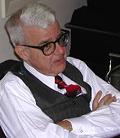
BURT BLUMERT
I met Blumert for the first time in 1965. Rushdoony had been buying gold coins from him for several years. Rushdoony moved to Southern California in 1965. He organized a meeting of conservatives in the upscale city of San Marino. He invited Blumert to come down and sell coins. This was the first time Blumert had ever encountered a group of rich people in what would become known as the hard money movement. They bought more coins in one meeting than he had ever sold in his life. That got his attention. His attention increased over the next four decades.
He was a very good businessman. He sold coins for a lower profit margin than just about anybody else in the United States. He ran a tight ship. His store never seemed to have more than half a dozen employees. It was very low key, which was sensible for somebody selling gold and silver coins. I never saw him do any advertising. It was mostly word-of-mouth.
He was a libertarian. He surely put his money where his mouth was. Within what could legitimately be called the Rothbard wing of American libertarianism, Blumert was there with his checkbook for three decades.
He was always upbeat. He always had a joke to tell. In fact, one of the costs of dealing with him was that you were required to listen to at least one joke, not always Jewish. He never had any pretensions of being a scholar, but he listened very carefully to what any speaker said, and he always seemed to know the fundamental principle that underlay whatever the speaker had just said. This is a skill not many people possess.
He was a man who was able to extend his job, which was selling coins, in order to further his calling, which was to help people understand why it is that gold provides monetary stability and promote economic liberty. He had the ability to move from what a customer was interested in, which was buying a coin, to an understanding of free market principles. In this sense, he combined practical wisdom with considerable theoretical expertise. When he told you about the history of this or that coin, you could be sure that you were getting the right stuff.
 CONCLUSION
In a sense, all of these people had ministries. They wanted to promote a particular worldview. They found themselves in a position of influence over other people’s thinking. Some of them were scholars. Some of them were businessmen. Sennholz was a mixture of both.
All of them were teachers. All of them had students. Only Sennholz was in the classroom filled with students seeking credit.
All of them had influence beyond their circle of friends and students. Their reputations spread by way of their students or by way of their writings. Not all of them are remembered. Henrietta Mears is not remembered. Burt Blumert is not widely remembered. Knott’s Berry Farm is remembered, but Walter Knott is not. People who do not write for a living tend to be forgotten within a few years of their deaths. This is another reason why people who are committed to ideas should take advantage of the World Wide Web.
July 13, 2012
Gary North [send him mail] is the author of Mises on Money. Visit http://www.garynorth.com. He is also the author of a free 20-volume series, An Economic Commentary on the Bible.
Copyright © 2012 Gary North

