


Recently by Gary North: Identify Your Legacy
In my previous report, “Identifying Your Legacy,” I discussed why you should be thinking about your posthumous legacy. It is not easy to plan a legacy, especially if you do not have several operational models of people who have left significant legacies. I have known perhaps two dozen people who left legacies that I regard as significant. The general public did not know of their existence. But this is true of virtually everyone who leaves a legacy. The general public never hears of them. The designer of a legacy should not attempt to impress the general public. If the legacy does impress the general public, it is likely to produce more harm than good. There are exceptions. Mother Teresa’s legacy is one. But there are not many.
I am going to discuss several examples of people I have known personally who have left legacies that shaped the lives of people who came in contact with them. In some cases, the person leaving the legacy was self-conscious in his attempt to transform the lives of other people. I think this is basic to leaving a legacy. The goal is to improve the lives of other people, who may or may not be paying customers.
A person who systematically disciplines his life so as to improve the lives of those around him is going to leave a legacy. This legacy may or may not be positive. There are power seekers in life who attempt to influence the lives of other people by means of power or even deception. Their goal is to change the hearts, minds, and behavior of those around them. Their legacy may be negative.
I am speaking about people who do their best to transform the lives of others in a positive way. They invariably have a specific way of life that governs their thinking and their behavior. They systematically attempt to structure their own lives in such a way that they become testimonies to whatever worldview they proclaim. This is sometimes called word-and-deed evangelism. I think this is a characteristic feature of the majority of those people I have worked with who have left positive legacies.
Part of leaving a legacy is to meet the standards of a phrase that is common in the United States: “Put your money where your mouth is.” Another phrase comparable to it is this one: “Walk the talk.”
FRANCIS POTTENGER
The most important person I ever met at a young age was my physician, Francis Pottenger. Dr. Pottenger was a specialist in nutrition. He was one of the earliest physicians in the United States to devote his career to a study of the relationship between diet and health. He was the son of a famous specialist in tuberculosis, who was also a distinguished researcher in physiology. He followed in his father’s footsteps.
Dr. Pottenger was a kind of iconoclast in the medical profession in the 1940s. He did a series of experiments on cats, which demonstrated that the cats which had been fed raw foods were healthier than cats that were fed cooked food. By emphasizing nutrition as the primary means of restoring people to health, he gained the hostility of the medical establishment. This did not bother him at all. His commitment was to his patients, and this led him to do extensive research on what would restore his patients to health.
My mother took me to his clinic when I was seven years old in 1949. I was suffering from bronchitis. I was generally unhealthy. He put me on a rigorous diet, and I stuck with it. My mother told me years later the following story. He asked me if I would do what he told me to do. I told him that I would. He said, “Let’s shake on it.” I agreed. And for the next 18 months, I did what he told me to do. More important, I did not do what he told me not to do. He told me not to eat anything made with refined sugar. I was allowed one scoop of ice cream a week. That was it. My mother told me later that I went to someone’s birthday party, and I had one scoop of ice cream. I refused to eat a piece of cake. The mother of the little boy called my mother, and she told her that I had said that I was not allowed to eat a piece of cake. She was amazed, because I did not eat the piece of cake.
Within 18 months, I got over my bronchitis. The diet that he prescribed, which was high in protein, low in refined sugar, high in steamed and raw vegetables, and which eliminated all processed flour, succeeded in restoring my health. I have never been unhealthy since that time. I have only been seriously sick a few times. The main exception was in 1961: salmonella poisoning. That was not a nutritional issue. So, it was my good fortune that my mother heard about Dr. Pottenger, and that she took what little money the family had to take me to his clinic.
In retrospect, I learned from Dr. Pottenger that it is wise to stick to your principles. It is also wise to conduct careful research into the outcome of the application of your principles. I suppose we could call them ideological, but he was ideological with the methodology. He attempted to test the results of his theories. Once he had done so, and the results were consistent with his theories, he could not be moved by criticism of the medical establishment.
He left a legacy of improved health to his patients, and he also left a legacy of improved health to those people who had not been his patients, but who learned of his research years later. Part of his legacy is here.
WAYNE ROY
When I was 16 years old, I took a year-long class in what was euphemistically called senior problems. The first half of the class was on the Constitution, state government, and local government. In other school districts, this would have been called civics. The second half of the class was devoted to issues related to starting a family. I suppose these were the problems that the district thought that seniors should be concerned with.
He was politically conservative. I also was politically conservative. I requested that I be allowed to take his class. I was a good enough student so that the counselor abided by my wishes.
He was a very effective teacher. He was a rigorous teacher. I did very well in it academically. I wrote term papers on the origins of Communism, on Roosevelt’s maneuvering of the country into World War II, and on the issue of compulsory water fluoridation. I became a conspiracy theorist at a young age.
In a public school, he taught a form of biblical creationism. That was made illegal in the early 1960s by Supreme Court decisions. He kept teaching creationism until his retirement in the late 1980s. He was so controversial in this regard that anti-creationist teachers organized a campaign to get him fired. These teachers were not even in his school district. The district was in Los Angeles County, but it had nothing to do with the city schools of Los Angeles. Yet teachers in Los Angeles organized the campaign to cross the city’s borders and get him fired. They failed. He was something of a legend.
He also taught his students that the Social Security system was actuarially unsound, and it would go bankrupt in our lifetimes. He was correct. The program began running red ink two years ago. Technically, it is bankrupt. It is being funded by the general fund, and the general fund is being funded by an annual deficit of $1.2 trillion. By any standard in 1959, the Social Security system is bankrupt.
The local Social Security system sent out a propagandist for the program. He spoke every year in every high school in the district, and in every senior problems class. He also spoke in schools outside the district. Just before he retired, he told Mr. Roy that the only students he ever encountered who asked penetrating questions regarding the statistical vulnerability of the system were the classes that Mr. Roy taught. We had been prompted to ask those questions.
He made a decision early in his career that he was going to do what he wanted to do in the classroom, and if somebody wanted to stop him from doing it, that critic would have to fire him. In the weeks just before my high school graduation in 1959, the high school administration succeeded in getting the district to transfer him to another high school. It demoted him to teaching freshman problems. I organized a resistance movement, and it did get publicity in the local newspaper, but they transferred him anyway. He didn’t change at all. He taught the same way at the other high school, and within a few years was one of the most popular teachers at the other high school.
I learned from him what I have learned from all of the ones who have left a successful legacy: stick to your knitting, and stick to your guns. I learned that it does not pay to back down from what you regard as your first principles of life.
He was the most effective teacher that I had in high school. He was among the most effective teachers I ever had. In terms of his personal influence over the students in his classes, I would say that it was exceptional. Not many teachers have an influence on their students which perseveres three years after graduation. There were not many classes like that in Southern California in the Eisenhower era. I doubt that there are any today.
HENRY HAZLITT
Like so many people who came to an understanding of the free market in the 1950s and 1960s, Henry Hazlitt was an influential figure. He had been an influential figure for at least 30 years. He is most famous for his book, Economics in One Lesson, which he wrote in 1946. But he was a New York Times columnist at the time he wrote that book. H. L. Mencken once said that Hazlitt was the only economist who knew how to write.
Hazlitt never went to college. He wrote his first book, Thinking as a Science, when he was 20 years old. That was the same year that he went to work for the Wall Street Journal. That was in 1915. To say that Hazlitt had a long writing career does not begin to convey just how long it was. His final article was published in 1988. He died in 1993 at the age of 98.
I did not meet him until I went to work for the Foundation for Economic Education in 1971. But I had been reading his materials ever since the late 1950s. I was a latecomer in this process. It is safe to say that anyone who called himself a libertarian in 1960 had been influenced, directly or indirectly, by Hazlitt. I suspect that this is still true.
Hazlitt was one of the early American promoters of the writings of Ludwig von Mises. He was convinced in the late 1930s that Mises was right, and that the New Deal was wrong. He wrote a positive review of Mises’s book, Socialism, for the New York Times Book Review in 1938. This book had been published in South Africa in 1936, although it had been available in German since 1922. I think it is safe to call him an early adopter. He understood the magnitude of what Mises had been teaching long before most American economists had read Mises’s books.
Hazlitt’s critique of John Maynard Keynes, published in 1959, The Failure of the ‘New Economics,’ is a comprehensive and thoroughly readable critique of Keynes’s General Theory. It was ignored by the academic profession, possibly because it was so thorough in its criticisms, but probably because Hazlitt was noted as a financial journalist, not as a professor of economics somewhere. He did not have the right credentials, so the academic community ignored him. I don’t think this bothered him in the slightest.
He was always enthusiastic. He was always extremely lively. In this sense, he reminded me of Murray Rothbard and Burt Blumert, the co-founder of the Center for Libertarian Studies. I never saw him dejected in any way.
I suppose my best recollection of him was late in his life, when he was in a retirement home. At his age, there were not many men in the home. He remarked, twinkle in his eye, that a lot of the ladies in the home made a fuss over him. Then, coming to his senses, he added, “but don’t tell Frances.” Frances was Mrs. Hazlitt. He was altogether a sensible man.
Again, the lesson is clear: stick to your knitting, and stick to your guns.
LEONARD E. READ
If anyone deserves the title of the founder of libertarianism, it is Read. He was a born promoter. He was the head of the Chamber of Commerce in Los Angeles in the 1930s. He had never gone to college. He was an effective speaker, and in later years, he proved to be an effective writer. He was never a back-slapper, but he was never confrontational, either.
His story of how he was converted to a free market position made an impression on me. He had gone to see the head of the Pacific Gas and Electric Company, William Mullendore. He went there, as he said, “to straighten out this fellow.” By the time he had spent a couple hours being taught the principles of voluntarism, he realized that the worldview which he had held when he walked in the door was wrong.
From that day on, he was not really in alignment with the Chamber of Commerce. The chamber was always ready to promote government intervention in favor of business. From that fateful meeting onward, Leonard Read was not.
A decade later, he turned down a job heading the International Chamber of Commerce, which would have paid him $100,000 a year, which in 1946 was a fortune. Instead, he started the Foundation for Economic Education. He had contacts with rich men because of his time spent in the Chamber, but he always attempted to establish a broad-based support for the organization. FEE was not a rich men’s plaything. In 1956, he launched the magazine which served as the major source of recruiting for the libertarian movement for the next 20 years: The Freeman. William F Buckley had wanted to buy it, but Read owned the name, and a year after Buckley started National Review, FEE started publishing The Freeman.
While Read was not a trained economist, he had a very clear understanding of how free markets operate. He wrote an article which I regard as the finest statement of the principle of the division of labor that has ever been written. It is called “I, Pencil.” It is the story of how nobody knows how to make a pencil. A simple pencil is such a complex device that it takes coordination and cooperation beyond anyone’s ability to comprehend in order to produce a simple pencil.
This insight has persuaded an untold number of people of the power and creativity of the free market. What was also creative about the article is that he wrote it as a narrative given by a pencil. He listed his own name only with these introductory words: “as told to.”
He also wrote a classic little book, which is unfortunately out of print, Elements of Libertarian Leadership. He wrote many other books, and numerous collections of essays. He never stopped writing, almost until the day he died at the age of 84.
Here is the same lesson: stick to your knitting, and stick to your guns. He turned down a lot of money in 1946 to do this.
PAUL POIROT
Paul Poirot was the best editor I have ever had. I would submit an article to him, and he either accepted it or sent it back, usually without comment. If I did not include subheads in the article, he would add them. That taught me to add subheads. This affected my writing style ever since. My first article was published in The Freeman in February of 1967.
He was very smart, and he had a very subtle sense of humor. He was able to penetrate to the heart of the matter like a sniper.
He suffered from a physical defect. One side of his face sagged. This affected the clarity of his speech. He did not like to speak in front of a group. He had a doctorate in economics, but because of his handicap, he was unable to go into the classroom. When he was hired as an editor, he achieved something very important: a fusion of his job and his calling. As an editor, he was doing the most important thing he could do in which he was most difficult to replace. He shaped the thinking of the generation of libertarians, and he oversaw the magazine that served as the single most important recruiting tool that the movement had. He got out that little magazine every month for three decades.
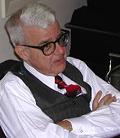 He stuck to his knitting, because he was unemployable in most other positions available to an academic. He was in a position where he could stick to his guns, because his employer was equally committed to the position. He always oversaw the magazine carefully, and at the end of Leonard Read’s career, Poirot rejected most of the articles that Read submitted to them. He had a high editorial standard, and his boss no longer met that standard. Fortunately, it was Read’s philosophy to decentralize and to let the person manage whatever it was that he had been assigned, up until such point as Read decided to fire the person. He did not fire very many people.
CONCLUSION
So far, I have surveyed the contributions of five men who made a difference in my life. All of them made the difference in the lives of many others besides me. Each of them did so by adhering to two principles: stick to your knitting and stick to your guns.
July 11, 2012
Gary North [send him mail] is the author of Mises on Money. Visit http://www.garynorth.com. He is also the author of a free 20-volume series, An Economic Commentary on the Bible.
Copyright © 2012 Gary North

