


There Is No Consumer Debt Crisis
September 16, 2011
Recently by Gary North: The Dollar As the World’s Reserve Currency. Poor World.
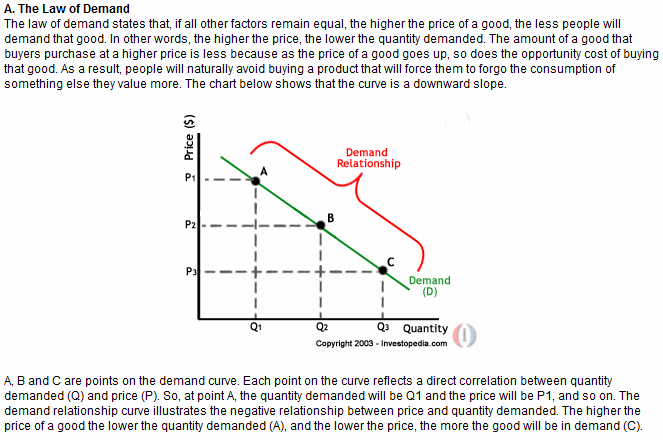
There is no more fundamental law of economics than this one: When the price of something falls, more of it is demanded.
This is illustrated by a demand curve. The demand curve slopes downward and to the right. The higher the price, the less is demanded. The lower the price, the more is demanded.
Are you with me so far? Good. Let’s continue.
The price of obtaining a loan is set by the rate of interest. The higher the rate of interest for any period of time, the higher the price of the loan. As the rate of interest falls, more debt is demanded, other things remaining equal.
The rate of interest has fallen dramatically over the last 22 years. This is especially true of mortgage loans. You can check this here. Here is the trend for 30-year fixed-rate loans.
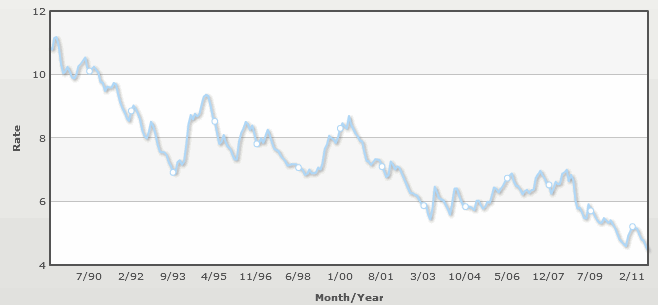
The monthly mortgage payment is by far the main component of household debt. So, when the price of leasing the money fell, more Americans borrowed the money and used it to buy nicer housing. This was a rational decision. “More house for the same monthly payment — what a deal!”
When it ceased to be a deal, housing prices fell. Again, people have been acting rationally. When things get tight, pay off old debt and stop adding more. Or substitute new debt at a lower rate. Cut your monthly payment. This is what Americans did.
Americans are not irrational. They can add up a column of figures. They do make monthly budgets. They do estimate how much money they require to get through one month. Then they make sure they don’t run out of money during the month.
To think that people do not do this is to imagine that they are fools. They are not fools. They are rational calculating decision-makers. They do not do self-destructive things unless they are addicted.
They are not addicted to debt. They are rational users of debt. They achieve their goals by using debt.
The Federal Reserve provides data going back to 1980 on what households pay out each month for the money they have borrowed. The data indicate rational behavior. People do not keep borrowing when they exceed a specific percentage of debt repayment in relation to disposable income. For home owners, the top rate is about 19%. In contrast, when this rate reaches 15%, they increase their debt burden. In the third quarter of 2007, the rate peaked.

According to the National Bureau of Economic Research, the recession began in December: the last month of the fourth quarter.
The public adjusts to the economy. The public seemed to know what the non-Austrian economists did not know in the fourth quarter of 2007: a recession was imminent. It was time to cut back on debt in order to reduce the monthly debt repayment burden. The public took defensive action before corporations did.
September 16, 2011
Gary North [send him mail] is the author of Mises on Money. Visit http://www.garynorth.com. He is also the author of a free 20-volume series, An Economic Commentary on the Bible.
Copyright © 2011 Gary North
 NASA Still Depends on Werner von Braun