


 Michael Crichton graduated from Harvard Medical School in 1969, four years after I did. The Andromeda Strain, the first novel he wrote under his own name, was published while he was still a medical student. (He had written six previous novels under pseudonyms to help pay his way through school.) Following the success of this book, and the 1971 film based on it, he opted to write popular fiction on a full-time basis, including screenplays and the TV series ER, based on his experience as a medical student in emergency rooms, rather than practice medicine (or do research). Since then he has written 17 novels, 4 non-fiction works, and directed 7 films. Publishers have translated his books into 30 languages and have sold more than 100 million copies of them. Twelve of his books have been made into movies, with Jurassic Park (1993), at $357 million, being the fifth highest-grossing film ever.
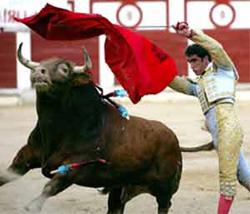
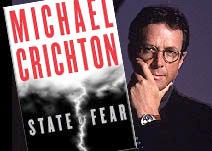 In State of Fear, a novel about ecoterrorism published on December 7, 2004, Michael Crichton addresses the science of climate change. This book has angered the environmental "politico-legal-media complex" (his term) because it raises doubts about global warming. Like a bull (Toro) in a bullring, proponents of human-caused global warming are charging after him. The New York Times’ reviewer calls State of Fear a "ham-handed" novel that is "half movie treatment, half ideological screed;" and he suggests that "Mr. Crichton" is seeking "to drum up publicity for himself by being provocative and contrarian." Regarding the climate science cited in the book, the reviewer says that it, like the book’s story, is also fiction. The New Yorker comments, "Blondes with lightning burns aside, State of Fear wants, weirdly enough, to be taken seriously." Slate calls him "right-leaning [and] contrarian" and the book a "political and hectoring screed." ("Contrarian" and "screed" are two terms that left liberals like to use to brand people and the articles and books they write that criticize their worldview.)
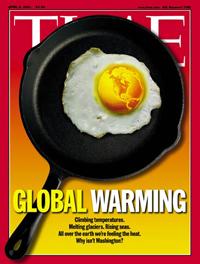 Americans learn in school and are told on television and in the print media, including in respected magazines like The National Geographic and Scientific American, that global warming threatens the planet. The 20th century is said to have had the greatest rise in temperature of any century over the last thousand years and that 1998 was the warmest year ever recorded. The threat is framed by the New York Times in a report that begins: "Heat-trapping gases from tail-pipes and smokestacks around the world are contributing to profound environmental changes, including sharp retreats of glaciers and sea ice, thawing of permafrost and shifts in the weather, the oceans and the atmosphere."
Authorities warn that the consequences of this human-caused global warming could be catastrophic. They predict that the level of oceans and tidal estuaries will rise 9.5 to 42.5 inches and the average temperature will have increased 10 degrees Fahrenheit by 2080.
One of the protagonists in State of Fear, a well-meaning attorney for an environmental philanthropist, defines global warming as "the heating up of the earth from burning fossil fuels." (p. 80). A better definition of global warming, however, which another character in the book gives, is this: "[It] is the theory that increased levels of carbon dioxide and certain other gases are causing an increase in the average temperature of the earth’s atmosphere because of the so-called u2018greenhouse effect.’" (p. 81, italics in the original). The carbon dioxide (CO2) level in the atmosphere at the beginning of the Industrial Era (ca 1750) was 280 ppmv (parts per million by volume); and over the last 50 years CO2 levels have risen from 315 ppmv to 370 ppmv, which is thought to be a result of humans burning coal, oil and natural gas. The mean global temperature increased 0.9° F (0.5° C) over the last century. So, according to the theory of global warming, human activity is causing the Earth to warm.
The novel’s Indiana Jones-like hero, Dr. John Kenner, a professor of Geoenvironmental Engineering on leave from MIT, teaches the other characters in the book (and the reader) climate science while they go about their adventures. On pages 562—563, he gives a clear and concise 400-word summary of our 5-billion-year-old planet’s history that puts climate change into perspective. The Earth, Dr. Kenner tells us, is now on its third atmosphere. The first one contained only helium and hydrogen; but, as the new planet cooled, it was replaced with a second one consisting of steam and CO2. Then, 3 billion years ago, newly evolved bacteria began to consume the CO2 in the atmosphere and replaced it with oxygen and nitrogen — two gases their cells excreted. The first ice on the planet occurred 2 billion years ago when its floating land masses (on tectonic plates) joined and blocked the circulation of ocean currents. And finally, as he puts it, "For the last seven hundred thousand years, our planet has been in a geological ice age, characterized by advancing and retreating glacial ice. No one is entirely sure why, but ice now covers the planet every hundred thousand years, with smaller advances every twenty thousand or so. The last advance was twenty thousand years ago, so we’re due for the next one."
Michael Crichton has studied climatology with the eye and rigor of a well-trained doctor/scientist. Before State of Fear was published I had read a lecture he gave at Caltech, in January 2003, titled "Aliens Cause Global Warming." I was impressed with his grasp of this subject and also with his cogent observations on science in general. In this lecture he warns, as he does in the book, "once you abandon strict adherence to what science tells us… you [can] subvert science to political ends."
Woven into the fabric of a page-turning thriller, State of Fear gives an unbiased assessment of the scientific evidence for global warming. The book also contains a 20-page annotated list of books and journal articles on the subject, an author’s message on climate science, and an appendix titled "Why Politicized Science is Dangerous." His conclusion: There is no human-caused global warming.
He’s right. Most of the rise in temperature in the 20th century occurred before 1940, before CO2 levels started rising. Temperatures fell 0.3° F from 1940 to 1970 while CO2 levels rose, from 310 to 325 ppmv (there is a graph of this on page 86). The temperature of the planet’s upper atmosphere (which the theory of global warming predicts should warm first), as measured by satellites, beginning in 1979, and weather balloons, has remained unchanged over the last 25 years despite a rise in atmospheric CO2 levels to 370 ppmv (p. 99).
Claims trumpeted by the media about how much warmer the planet is now compared with previous decades, centuries, and millennia are equally false. Indirect measurements of temperature, obtained from ice cores, tree rings, corals, ocean sediments, boreholes, and glacier movement, show that there was a Medieval Warm Period, from 800 to 1,300 (there were no thermometers then), when the planet was considerably warmer than it is now. Vineyards flourished in England and cattle grazed in areas of Greenland that today are blanketed by ice more than a mile thick. (The climate was also warmer 6,500 years ago during the Holocene Climate Optimum.)
Policy makers and environmentalists claim that a "consensus of a very large group of scientists" agrees that greenhouse gas emissions are causing global warming. In his Caltech lecture, Dr. Crichton says, "I regard consensus science as an extremely pernicious development that ought to be stopped cold in its tracks. Historically, the claim of consensus has been the first refuge of scoundrels… In science consensus is irrelevant. What is relevant is reproducible results… Consensus is invoked only in situations where the science is not solid enough." He’s right. Furthermore, the proclaimed consensus for global warming is bogus: 1,500 scientists (of whom only 181 work in fields related to climatology) signed a pro-global warming petition in 1997, but 19,000 scientists signed a petition a year later opposing the U.N.’s Kyoto Treaty Against Global Warming. (The petition states, "… The proposed limits on greenhouse gases would harm the environment, hinder the advance of science and technology, and damage the health and welfare of mankind. There is no convincing scientific evidence that human release of carbon dioxide, methane, or other greenhouse gasses is causing or will, in the foreseeable future, cause catastrophic heating of the Earth’s atmosphere and disruption of the Earth’s climate….")
Environmental activists view CO2 as a pollutant. If plants could talk, however, they would disagree. Like oxygen is for animals, CO2 is a plant’s lifeblood. CO2 levels 200 million years ago were 5 to 10 times higher than they are now (without mothers driving SUVs). The planet was greener, enabling dinosaurs to thrive. "Contrarians" can say, with good evidence to support it, that burning fossil fuels to raise atmospheric CO2 levels promotes healthy plant growth. Studies show that a 300-ppmv boost in CO2 above current levels (in climate-controlled greenhouses) increases the productivity of plants by 30 to 50 percent, as measured by rate of photosynthesis and biomass production. Orange trees produce twice as many oranges, each containing a 20 percent greater amount of vitamin C. Rather than cause catastrophic global warming, perhaps continued burning of fossil fuels will help forestall the onset of the next ice age.
Why do so many people (including those 1,500 scientists) believe in global warming? One reason, as one of the characters in State of Fear puts it, is that "all reality is media reality." People who get their information from watching television and reading the New York Times do not learn the true facts of the matter. Media reality says there is man-made global warming, which if not constrained will be catastrophic.
For some scientists their views on this subject can affect their livelihood. Government and NGOs (non-governmental organizations) award $2 billion in grants each year for climate research. These organizations expect the scientists they fund to support the idea that global warming is a problem. As Michael Crichton points out (in his Caltech lecture), we now live in an "anything-goes world where science — or non-science — is the hand maiden of questionable public policy… Evidentiary uncertainties are glossed over in the unseemly rush for an overarching policy, and for grants to support the policy by delivering findings that are desired by the patron."
There are two other reasons why people believe in human-caused global warming despite strong evidence against it. Global warming is like a religion. In "Distinguishing Reality from Fantasy, Truth from Propaganda," a lecture given to the Commonwealth Club in September 2003, Michael Crichton identifies environmentalism as "the religion of choice for urban atheists." Gaia, the living planet, is its Mother Goddess. In this religion’s canon, industrial civilization (to paraphrase Merlin Stone, author of When God Was a Woman) is acne on her face. Crichton notes how environmentalism mimics Judeo-Christian beliefs: "There’s an initial Eden, a paradise, a state of grace and unity with nature, there’s a fall from grace into a state of pollution as a result of eating from the tree of knowledge, and as a result of our actions there is a judgment day coming for us all. We are all energy sinners, doomed to die, unless we seek salvation, which is now called sustainability." The Kyoto Protocol is it’s articles of faith. What about the fact no change in satellite and balloon-measured temperatures has occurred over the last 25 years despite rising CO2 levels? No problem. Adherents of this religion ignore facts like this and recite their catechism of apocalyptic computer climate models.
Global warming also has ideological underpinnings. "Environmentalism is the last refuge of socialism," as one observer puts it. Although socialism may have failed as an economic model, many believe it can halt man-made global warming and, by this means, reform civilization. Constraining CO2 greenhouse gas emissions, as stipulated in the Kyoto Treaty, will require a kind of global governance that only a socialist state can provide — a totalitarian global bureaucracy with international government inspectors at one’s doorstep that closely regulates, prosecutes, and confiscates property of people and industries that make "greedy [CO2 producing] choices" (like driving SUVs). The apparatchiks of this movement — lawyers, bureaucrats, environmentalists, and media people — use scare tactics as part of a "global warming sales campaign" to promote their agenda and acquire influence. As Professor Norman Hoffman in State of Fear points out, fear is one of the best managers of social control in a state’s armamentarium.
The global warming agenda is pro-state, pro-war (against humanity in general), and anti-market. To meet Kyoto CO2 emission constraints the U.S. would have to reduce the amount of electricity it obtains from burning coal by 50 percent. Since 55 percent of this country’s electricity is supplied by coal (nuclear power and hydropower provide the rest), this would require reducing electricity use by 25 percent, which would cause a corresponding 25 percent drop in GDP. It dropped 10 percent in the Great Depression. Since poverty is a major cause of death, a drop in GDP this severe would be the functional equivalent of a death sentence for millions of Americans. John Kenner in State of Fear says, "Enviros refuse to take into account the possible harm the policies they recommend can cause" (p. 488). David Brown’s answer to that is, "Human suffering is much less important than suffering of the planet" (he is the founder of Friends of the Earth). Because of their hostility to markets and self-directed human activity, environmental activists would rather there be mass starvation (of people in Africa) than have capitalists profit from preventing it by employing such "unnatural" measures as high-yield genetically engineered crops. (I recommend Paul Driessen’s Eco-Imperialism: Green Power, Black Death and Robert Bidinotto’s Death by Environmentalism for further reading on this subject, and also my article Advantages of Nuclear Power on why switching to wind and solar power won’t help.)
A real life John Kenner is Harvard professor Willie Soon. Like Dr. Kenner in the book, a professor from nearby MIT, Dr. Soon, tirelessly and without flinching, takes on the global warming establishment. He, in collaboration with fellow professor Sallie Baliunas and others, has identified the true cause of global warming (and cooling). The cause is variability in energy output from the sun. (Modelers take for granted that solar luminescence is constant in their computer climate models.) Sun spots, which reflect changes in solar magnetic field, deflect and modulate galactic cosmic rays — and cosmic rays affect the cloud cover of the earth and thus drive terrestrial climate. When sun spots occur frequently, its effect on cloud cover causes global temperature to rise. When they decrease, or are absent, global temperature falls. (Currently they are more frequent.) After the Medieval Warm Period sun spot activity declined drastically and a Little Ice Age occurred (from 1300 to 1850). Willie Soon examines this in his book, written with Steven Yaskel, The Maunder Minimum and the Variable Sun-Earth Connection (2003), and in an article, written with Sallie Baliunas, titled "Lessons and Limits of Climate History: Was the 20th Century Climate Unusual?"
Few Americans have ever heard of Willie Soon. (I found out about him several years ago when he gave a lecture at a Doctors for Disaster Preparedness Meeting.) But millions of Americans, and, with it being translated into many languages, people throughout the world will read State of Fear and know its protagonist John Kenner. And through him, and other characters in the book, abetted by its author’s message and bibliography, they will discover the true facts on "global warming," facts which the New York Times and other print and television media choose not to disclose.
As one of the 483 reviewers of the book on Amazon.com writes, "He [Michael Crichton] is making a lot of people look ridiculous. He is Martin Luther, Salman Rushdie, and Andre Sakharov. He is smashing the established order and it will not be tolerated. The liberal inquisitors will do everything in their power to destroy him over this book, if only to attempt to discourage further truth telling by like-minded authors. That is reason enough for you to buy this book."
 Toro! Toro! Michael Crichton.


