


Recently by William Norman Grigg: The Global Land Grab
Mike Kennedy, police chief of Sunriver, Oregon, was fired on February 16, receiving a reported severance package of $100,000. That sum, representing the balance of Kennedy's 2012 salary and accrued vacation time, seems oddly extravagant, given that his position was little more than a glorified sinecure.
"This is not about Mike being a bad guy, or anything of that nature," Ron Angell, chairman of SSD's Managing Board, told the Bend Bulletin. Angell described the severance deal as "fair and generous"; the second adjective is a pronounced understatement, and the first is at best disputable, given that there's no evidence that the people whose property and rental taxes were used to pay Kennedy and his cohorts benefited at all from that arrangement.
Some Sunriver residents have long wondered why a resort community with a permanent population of roughly 1,000 people with a negligible crime rate needs a police department. This arrangement is even more peculiar in light of the fact that the U.S. Census Bureau considers the vacation enclave to be part of nearby Bend.
With Kennedy removed from his position, the Deschutes County Sheriff's Office will be providing "oversight" to the Sunriver PD – which now consists of two sergeants and eight officers – until a new chief is appointed. There is no obvious reason why a resort already covered by the County Sheriff's Office requires its own police force. Although Angell – the only member of the SSD willing to speak on the record – maintained that Kennedy, who joined the Sunriver PD in 1990, "served our community well," he also told the Bulletin that the decision to fire the chief was based on a desire to "develop a closer relationship with the community."
At least some Sunriver residents insist that the police are already too close for comfort.
Reporters for NBC affiliate KTVZ spoke with a "handful" of Sunriver business owners who "declined to speak on camera, but mentioned some tension involving claims of abuse or harassment by the resort community's police force." Those problems are most acutely displayed by the bizarre case of Robert Foster.
A long-time Sunriver resident and Bend native, Foster runs Tubs Alive, a hot tub service business with more than 600 clients in the area. In 2010, two members of the Sunriver Police Department – Sergeant Joseph Patnode and Officer Kasey Hughes – obtained a restraining order against Foster, claiming that he was "stalking and harassing" them. Under the terms of that restraining order – which was arranged ex parte – the supposed victims can have Foster arrested any time he comes within their field of vision within Sunriver's jurisdiction.
The order targeting Robert Foster – who had no prior criminal record of any kind – amounts to a bill of attainder. Chief Kennedy and three of his subordinates tidily disposed of the necessity of providing evidence that Foster had ever committed a crime. Instead, they criminalized the person of Robert Foster, as if he were the municipal equivalent of an "unlawful enemy combatant" subject to indefinite detention without legal recourse.
Foster, a slender, gray-haired 52-year-old grandfather, is outspoken and occasionally confrontational in a way that civic-minded businessmen should be. Foster's troubles began several years ago when he distinguished himself as a critic of a proposal from the Sunriver Owners Association (SROA) – the resort's equivalent of a municipal government – to turn the police force, which were essentially a corps of mall cops, into a full-fledged revenue-farming apparatus.
Between 1987 and 2007, Sunriver's police force, such as it was, had no authority to issue speeding and seat belt citations, which are very lucrative instruments of "taxation by citation." They issued the tickets anyway, of course.
The resort property's roads, which had been classified as public highways under the jurisdiction of Deschutes County, were transferred to the SROA in 1987. Although the Sunriver PD continued to act as if they were public conveyances, and obfuscate the question whenever it came up in public, the roads were actually private premises accessible to the public – that is, they had the same legal status as a private driveway.
In 2001 a man named Robert J. Ball challenged a ticket issued by the Sunriver PD for driving with a suspended license. Although Ball's conviction was upheld by the Oregon Appellate Court in 2004, that ruling addressed the narrow issue of the "reasonable suspicion" behind the traffic stop; the decision didn't address whether Sunriver's roads were highways.
By that time, the SROA – at least behind the scenes – had acknowledged that Sunriver's streets were not highways. In 2002, while Ball's case was working its way through the courts, the SROA re-opened the question after its Public Works Department purchased an ATV for use in service calls. Chief Kennedy insisted that Oregon's Motor Vehicle Code didn't permit the use of an ATV on a highway.
When the SROA modified the community's rules and regulations to allow the ATV to operate on Sunriver streets, Kennedy objected that this was still impermissible under state law. For the next four years, the Sunriver police continued to issue traffic tickets of dubious legality while a special committee studied the matter. In December 2006, the SROA proposed a "public access easement" to Deschutes County – but this was rejected by the County, which ruled that Sunriver's streets were private roads, rather than public highways.
In February 2007 – nearly twenty years after Sunriver's roads had been privatized – the SROA formally recognized that they were "premises open to the public," rather than public highways. This meant that most of the traffic stops conducted in Sunriver during the previous two decades had been illegal – and the SROA and SRPD offered an inviting target for a class action civil rights suit.
In practical terms, commented Susan Lawson of the Sunriver Scene in 2007, this meant that "If someone were robbing the mini-mart up the road the police would obviously have the power to arrest the suspect. The police are simply not permitted to enforce a very small number – it's either six or eight – of laws dealing with minor traffic infractions, because our roads are the equivalent of private property."
"No seatbelt? No citation. No tail light? No ticket. In too much of a hurry? Not to worry," reported a March 3, 2007 AP story from Sunriver. "Sgt. P.J. Beaty watches people in this upscale development breaking traffic laws, and sees plenty of them. But he can't pull them over. A man swerved head-on into Beaty's lane, and then back out again and Beaty couldn't lay a glove on him."
This simply wouldn't do, of course. The SROA successfully lobbied Oregon State Rep. Gene Whisnat to sponsor H.B. 3445, a bill custom-tailored for Sunriver that extended police "authority" to include roads and streets on "premises open to the public that are owned by a homeowners association…."
In 2008, following passage of H.B 3445 – which put the police in the business of collecting revenue at gunpoint – the SROA enacted a special multi-million-dollar tax assessment for a special service district (SSD) it had created in 2002. The SSD now included a fully functional – and entirely redundant – police department.
Many local residents thought this arrangement was wasteful and unnecessary, but only Bob Foster made himself conspicuous by his public opposition to it. He became a familiar presence at public meetings, where he would barrage the SROA with pointed questions and express forceful opposition to an arrangement he regarded as both profligate and counter-productive.
During one public meeting in which the town's economic challenges were discussed, Foster suggested that the SROA could save several millions of dollars each year by seceding from Deschutes County, thereby canceling the expensive service district agreement. He also recommended that the duties of the police be scaled back to their pre-2007 role, and that Sunriver contract with a nearby town called La Pine for emergency services.
"That's the kind of talk that made me Public Enemy Number One," Foster recalled during an interview last year. In a sense, Foster became a material threat to the Sunriver Police – not to the physical safety of any of its officers, but to the agency's continued access to a steady revenue stream. He and his daughter, Rebecca Foster Kossler (who has spent countless hours immersed in every detail of this complex and infuriating case), suspect that Chief Kennedy, along with members of the SROA, conceived of the "stalking" order as a way of intimidating, silencing – and perhaps exiling – a local businessman who had become a prominent political dissident.
During a June 15, 2010 sworn deposition, then-Chief Kennedy insisted that Foster "breaks the law all the time," but admitted that neither he nor any member of his department had ever arrested him. (Foster has been subsequently arrested twice for supposed violations of the stalking order.)
In his testimony, Kennedy insisted that Foster's alleged crimes included "disorderly conduct, interfering with a police officer, menacing, harassment, and stalking."
"Was he ever arrested for any of those?" asked attorney Frank Wesson, who was representing Foster in the hearing.
"No; fortunately for him, no," Kennedy replied.
If Foster had been the fearsome one-man crime wave Kennedy described, the Chief's own testimony provided sufficient reason for him to be terminated for cause: He had admitted, under oath, that the police department he led was allowing a repeat offender to prowl the streets of Sunriver.
Rather than instructing his officers to arrest Foster if there was evidence that he had committed a crime, Kennedy explained that he instructed them "to document every time they had a problem with Mr. Foster." He did this because "Mr. Foster was harassing and stalking our officers."
The resulting memoranda depict foster as if he were a cartoon super-villain. For example, one official report from Sunriver Officer Dree Warren to Chief Kennedy described Foster as glaring at Sunriver police officers and emitting a sinister laugh like that of "the villain the Joker from the Batman cartoons."
A report filed by Officer Kasey Hughes in the fall of 2010 is heavy on sinister insinuation and barren of anything remotely resembling evidence of criminal behavior. Hughes described how he and two other officers were responding to a citizen complaint at the Crossroads Gas Station in Sunriver when he saw Foster "sitting at a table directly in front of his truck," writing in a notepad. A few minutes later, while interviewing a local resident, "I saw Foster standing outside his vehicle, staring at me," Hughes continued. "I also noticed him washing his windshield very slowly."
Foster's "threatening" behavior was supposedly noticed by the individual Hughes was interviewing. "Man, he's eye-f**king you," the resident supposedly told Hughes, according to the officer's unsupported account. As Hughes describes the incident, Foster's mere presence was enough to frighten away one of Sunriver's intrepid defenders – although, oddly enough, his supposed stalker "was still at the gas pumps when I left."
Incidents of that kind were sufficient to persuade a judge to issue a restraining order for the purpose of protecting the timid creatures employed by the Sunriver PD from the supposed menace of a skinny, peaceful grandfather who looks like an aging hippie whose only "offenses" were to speak his mind and refuse to be intimidated.
In an October 8 2010 petition seeking the extension of the stalking protection order, Officer Hughes accused Foster of making "violent and aggressive" statements that displayed a "distorted perception" of the police department. Among those supposedly criminal utterances was "You're a public servant, I'm your boss." On another occasion Foster "referred to the Sunriver Police as `the local Gestapo'" – a description that would possibly qualify as evidence of "criminal intent" if police are given authority to enforce Godwin's Law.
Foster "appears to be a highly volatile person," simpered Hughes, accusing him of "obsessive behavior that could turn to aggression at any point." Besides, Foster "has access to guns," pouted Hughes, who – unlike his supposed persecutor – carries one with him at all times. Furthermore, to the extent that either overt or oblique threats have been made, Foster was the victim, not the aggressor.
Last year, Foster's civil case was submitted to third-party arbitration. Under the terms of the police department's settlement offer, Foster would be subject to a 10-year permanent stalking protection order that could not be modified, or he could choose a 5-year permanent stalking order and pay $10,000 in legal costs. In either case, Foster would agree not to file a civil rights complaint he had filed against the police, and the existing legal record of the case – including the critical admissions offered by then-Chief Kennedy – would be expunged. This would leave the police with the ability to arrest Foster on sight.
All of this was admitted by William Flinn, the attorney from Bend appointed to serve as arbitrator.
"I know Bob feels that, had he accepted the [settlement] offer, the police still would have found some way to construe episodes of his future conduct as stalking," Flinn wrote to Foster's defense counsel on July 11, 2011. "But, I don't think that was a good reason to reject the offer."
In a follow-up e-mail four days later, Flinn reiterated his demand that Foster submit to the ludicrous settlement offer, telling his attorney that "there is virtually no chance that Bob will prevail in court, despite your excellent trial skills and some evidence of paranoia/lack of candor on the part of the police." (Emphasis added) A more appropriate term to describe that "lack of candor" is "perjury."
In addition to being "paranoid," the Sunriver police also pose a threat of potentially lethal violence to Foster, according to Flinn:
"The skirmishing between the Sunriver police and Bob Foster has been going on for over five years. So far, no one has resorted to the use of weapons, but it appears the risk increases with every new encounter. If I were the judge hearing this case, my priority would be to defuse the situation before it gets violent. No judge wants to be blamed, in retrospect, for passing up an opportunity to prevent armed conflict and the loss of life."
In his sworn deposition, then-Chief Kennedy admitted that Foster has never been seen carrying a firearm. The only threat of violence in any of those encounters was that posed Kennedy and his cohorts – and it could have been neutralized at any time by withdrawing the ludicrous protective order.
A judicial hearing into the case was scheduled for January 26. Foster, who had been forced to leave Sunriver for three months to avoid violating the spurious stalking order, returned from visiting family in Florida. Dozens of people – including nearly the entire Sunriver Police Department, dressed in uniform and wearing body armor – crowded into a tiny room in the Deschutes County Courthouse. Although the hearing was scheduled for 9:30 a.m., the assembled crowd waited for several hours while District Judge Barbara Haslinger held a series of off-the-record conversations with each of the parties in her chambers.
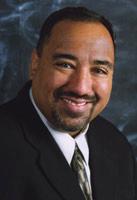 Haslinger, a former social worker, proposed to replace the Protective Order with a "civil order" that would require a hearing to examine a stalking complaint against Foster before he could be arrested for "stalking" a police officer. In practical terms, this would mean that rather than being hauled away in handcuffs any time he was spied by any of his "victims" on the police force, Foster would merely be hauled into court. Not surprisingly, Foster rejected the proposed deal, and the hearing was rescheduled for April. This meant that Foster had to depart Sunriver once again, while the SROA and the police department – buttressed with money gleaned from local home and business owners – were given time to devise another round of dilatory tactics.
Tellingly, Foster and his family are eager to get the matter into court – and their supposed victims on the police force are just as determined to avoid offering sworn testimony in public. Was the decision to fire Chief Kennedy pre-emptive damage control by SROA in anticipation of the April hearing into Bob Foster's case?
Reprinted with permission from Republic Magazine.

