


Recently by William Norman Grigg: The Missing Lesson From Norway: Never Trust a Man in Uniform
"His death was gang-involved, the way I see it," lamented former Orange County Sheriff's Detective Ron Thomas after viewing the mangled body of his 37-year-old son, Kelly. "A gang of rogue officers … brutally beat my son to death."
The description of the crime is appropriate: Kelly Thomas was murdered by a thugscrum of at least six police officers on a sidewalk in Fullerton. Kelly, who had a criminal record, was a homeless adult who had been diagnosed with schizophrenia. On the evening of July 5, police were called to a street near the Fullerton bus depot by a report that someone was burglarizing parked cars.
Kelly was identified as a suspect, and was uncooperative with the police. He was tasered at least five times and beaten until brain-dead while pleading with the officers and crying out for his father. Multiple eyewitness accounts have disclosed that the beating continued – punctuated by the familiar demand that the victim "stop resisting!" – long after Kelly was on his back, motionless and defenseless.
That this was a gang-involved murder is indisputable. With all proper respect to Ron Thomas, however, the grieving father is desperately wrong about one detail: The murderers were not "rogue officers." Once the gang assault on Kelly began, practically the only thing that could have saved his life would have been the timely intervention of a rogue officer.
As an institution, the police do not exist to defend life, liberty, and property. That would be the role played by peace officers – a population that is, for all intents and purposes, extinct. Police are given the task of "enforcement" – the imposition of rules devised by, and on behalf of, the wealth-devouring class. That role includes dispensing summary punishment against people who display anything other than instant, unqualified submission to them and to the political order they embody. Any material good that is done by a police officer is a renegade act, given the nature and purposes of the institution that employs him.
In any situation blighted by the presence of a police officer, that armed functionary's first priority is not to "serve" or to "protect" anybody. Sociologist James Q. Wilson, whose writings became somethingakin to canonical texts for Rudolph Giuliani and other politicians and policy makers of an authoritarian bent, explains that a police officer's first priority is to "impose authority on people who are unpredictable, apprehensive, and often hostile."
That apprehension is an understandable reaction to the presence of an armed stranger of dubious character who demands unqualified submission. The hostility is predictable, entirely defensible, and generally commendable. Members of the Costumed Enforcer Class refer to it as "Contempt of Cop," and regard it as an offense subject to summary punishment through the application of state-licensed violence, frequently of a lethal nature.
Ron Thomas – who, once again, is a retired law enforcement officer himself who teaches "arrest and control" techniques – explains that the officers who murdered his son weren't attempting to arrest him as a criminal suspect, but rather "bullying" him "under color of authority" as punishment for "contempt of cop."
Incidents of this kind display a standard morphology:
A cop confronts a citizen and encounters brief, trivial, and often justified resistance. He summons "backup," and a thugscrum – which is a phenomenon similar to a criminal "flash mob," but generally more lethal – quickly coalesces and deals out hideous violence while terrified citizens look on in horror and apparent helplessness. Any officer who doesn't play a hands-on role in beating the "suspect" will devote his attention to "crowd control" – that is, preventing intervention on behalf of the victim, and often confiscating any recording devices that might be used to gather incriminating video of the episode.
Officially sanctioned gang violence depends on a chain reaction of conformity, and often a single rogue element would be sufficient to prevent it from reaching critical mass. A "rogue cop" – that is, a peace officer devoted to protecting life, liberty, and property, rather than a dutiful law enforcer determined to uphold "authority" – would interpose on behalf of the victim.
It's difficult to know how often this happens, but we could round off that estimate to "never." This is because "rogue" cops who commit such renegade acts of lawfulness are never treated with the union-organized solicitude displayed toward "good" cops who commit acts of criminal violence against Mundanes.
Witness the case of former Austin Police Department Officer Ramon Perez, who joined the force as a 41-year-old rookie cop because of a sincere desire to protect people from crime. During a January 2005 domestic violence incident, Perez refused an order by a superior officer, Robert Paranich, to use his Taser on an elderly man who was not a threat to himself or anybody else.
Owing to the fact that the subject was a frail man of advanced years, Perez was understandably concerned that the portable electro-shock torture device would kill him. Furthermore, using the Taser in that situation would have violated the explicit provisions of the Austin PD's Taser Policy. Perez was able to resolve the situation through de-escalation, rather than by using potentially lethal force to "impose authority."
Two days later, Perez was given what could only be considered a punitive transfer to the night shift. Two months later, following a second incident in which Perez chose de-escalation over armed compulsion, he was invited to what he was told would be a "counseling" session with the APD's staff psychologist, Carol Logan. The purpose of that meeting, Perez was told, was to help him develop better "communication skills" with his fellow officers. In fact, it was a disguised "fit-for-duty review" convened to find a pretext to purge the probationary officer from the force before the "rogue cop" could infect others with his respect for individual rights.
 As the Austin Chronicle reported, Ms. Logan's four-page report focused "entirely on Perez’s moral and religious beliefs, which Logan concludes are so strong they are an `impairment’ to his ability to be a police officer."
Perez, a self-described non-denominational fundamentalist Christian, an ordained minister, and home-schooling parent, was not as morally ductile as the typical police recruit. He saw protection of civil liberties as the paramount duty of a police officer, an obligation he viewed as a literal religious vocation. For this reason Perez was seen as unsuitable for a ministry in the State's punitive priesthood.
Perez was given an ultimatum by his superiors: He could resign and retain his peace officer's license, or be terminated and lose it. This was done, once again, as punishment for Perez's "rogue" conduct – which consisted of his refusal to break the law and violate department policy.
If a "rogue" cop had intervened on behalf of Barron Bowling on July 10, 2003, the one-time cement worker from Kansas City, Kansas wouldn't be a functional invalid at the age of 37. It was Bowling's life-changing misfortune that day to be involved in a minor non-injury crash with an automobile carrying three undercover DEA agents. In a fit of juvenile impatience, the driver, DEA agent Timothy McCue, attempted to pass Bowling's car illegally on the right side of a single lane.
After the vehicles pulled over, agent McCue came boiling out of his car with a drawn gun. With help from one of his fellow heroes, McCue forced Bowling lie face-down on the pavement, despite the fact that the 98 degree heat had turned it into a frying pan. When Bowling attempted to push himself up, McCue began to punch and pistol-whip him while taunting his victim for supposedly being an "inbred hillbilly" and "system-dodging white trash." One witness to the crime reported that McCue threatened to murder Bowling. With the help of his comrades, McCue handcuffed the victim and continued to beat and kick him after he was shackled and completely helpless.
In keeping with standard procedure, the assailants accused the victim of assaulting them, which would explain why the unarmed and outnumbered "aggressor" was left with severe brain damage, persistent tinnitus, incapacitating migraines, chronic dizziness, nausea, and lingering emotional trauma that led to at least one suicide attempt.
While in police custody, Bowling was told by Officer Robert Lane that the facts of the case didn't matter; he was the one going to prison because federal agents "do pretty much what they want." Bowling's only hope to avoid prison was Detective Max Seifert, who was assigned to investigate the case – which, in practice, meant to fill out whatever paperwork was necessary to ratify McCune's perjury.
For reasons that mystified his colleagues, Seifert actually conducted an investigation. His first question was: What happened to the witness reports collected at the scene? Officer Lane told him that those documents had been "lost," because they served only to make the DEA agents "look bad."
Seifert's persistence led Deputy Chief Steven Culp chief to take him aside and order the detective to drop the matter. At the time, Seifert – who had been respected by both his fellow cops and the public at large – was less than a year from being "fully vested," meaning that he could retire with his full pension. The leverage provided by that fact provided the tacit but unmistakable "or else" that hovered above the conversation between Seifert and Culp.
To his considerable credit, Seifert continued with his investigation. After Seifert filed his report, the district attorney announced that he was dropping the charges against Bowling. Deputy Chief Culp, however, pressured the prosecutor into reinstating the case. Seifert went on the testify on behalf of the defense in Bowling's criminal trial – which resulted in an acquittal on the spurious assault-related charges – and on behalf of the victim in his federal civil rights lawsuit.
For his insistence on telling the truth, Seifert was subjected to a campaign of ridicule and abuse from his colleagues on the police force. As U.S. District Judge Julie A. Robinson pointed out in a ruling that awarded Bowling more than $833,000 in damages, “Seifert was shunned, subjected to gossip and defamation by his police colleagues, and treated as a pariah." More importantly, he was punished for insubordination by being forced into early retirement, thereby losing his pension.
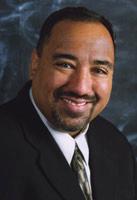 None of the law enforcement officers involved in the assault on Bowling and subsequent cover-up was disciplined in any way. The only one who was punished was the "rogue" officer who had acted in defense of the truth, and of the victim’s individual rights. Steven Culp, the official who ordered Seifert to participate in the cover-up and then purged him when he refused to do so, is now the Executive Director of the Kansas Commission on Peace Officers' Standards and Training. Without so much as a faint whisper of irony, Culp claims that his new job is "to provide the citizens with qualified, trained, ethical, and professional peace officers" who act "in a manner consistent with the law while being considerate of the citizens…."
Residents of the Sunflower State can be confident that Steven Culp – like those in charge of recruiting and indoctrinating police officers elsewhere in the Soyuz – will do his formidable best to protect them from "rogue cops" like Max Seifert.

