


As one who eagerly reads whatever Will Grigg has to write, and especially his posts on the LRC Blog, I was especially interested in his post regarding the conduct of two Denver police officers last May. The post describes an action which in normal cases would be considered armed robbery and also would set up the perpetrators for federal charges, if the U.S. attorney in Denver so chose.
According to the CBS affiliate in Denver, two off-duty Denver police officers drove to a McDonald’s drive-through early on May 21 of this year, but became agitated with what they believed to be slow service. According to the report:
Sources familiar with the case, and the fast food worker’s account of what happened, say two off-duty Denver police officers placed an order from their car in the early morning hours of May 21. But once at the drive through window, the employee said the men became agitated and angry at how long their food was taking. The men thought they were being ignored, according to contacts familiar with the worker’s account. The male clerk then said one of the officer’s flashed his police badge and pointed a pistol through the drive through window in a threatening manner, before driving off without paying.
Both officers are assigned to Denver International Airport although only one has been placed on administrative leave with pay, pending the outcome of the case.
If the man at the window is telling the truth, then this is a clear case of armed robbery. First, the officer allegedly pulled out a gun and pointed it at the clerk. It does not matter that he flashed the badge, as the badge means nothing in this case because it does not entitle the officer to any free food.
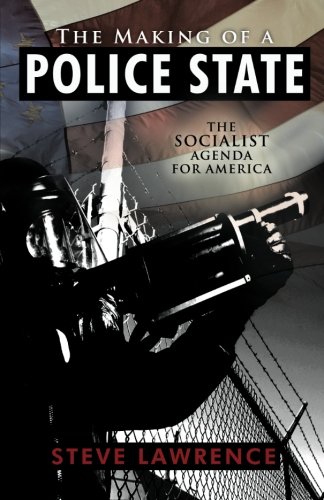 The Making of a Police...
Best Price: $18.39
Buy New $23.95
(as of 01:45 UTC - Details)
The Making of a Police...
Best Price: $18.39
Buy New $23.95
(as of 01:45 UTC - Details)

The key is that he drove off without paying. That is robbery, and the use of a gun in this situation, even if it were not loaded and even if he did not tell the clerk that he had better give him the food or else, the fact that he showed a gun and drove away without paying for his food is enough to trigger an armed robbery charge.
The second officer also is liable for the same crime because he was with his friend. That is all that it takes for him to face charges, even if he had nothing to do with the other officer’s actions. People who accompany armed robbers are charged with the same crime even when they did not know the other person was going to commit a robbery.
Second, if the local U.S. attorney wanted to become involved, he or she easily could charge the officers with one of the many "gun crimes" that dot the federal code. Lest one think I am joking, it is a federal crime to use a firearm in the commission of any robbery, and driving off without paying and pointing a gun at the person handing over the item, whether it be food or anything else, is armed robbery. In fact, the officer could be charged with a gun crime even if he did not point the gun at anyone or even had left it in his holster.
 That is right. The government regularly charges people with gun crimes simply if a gun was nearby. I recall one case in which a person was charged with "using a firearm in commission of a felony" because the gun — unloaded, by the way — was lying in the locked trunk of the car. In other words, the very presence of a firearm nearby is enough to trigger such a charge, and the courts have made such charges stick, no matter how dishonest and ridiculous they might be.
If a private citizen were to have done what this officer allegedly did, I can assure you that he or she would be arrested and held on a very high bond. There is no way around the fact that this would constitute an armed robbery, and a district attorney easily could — and would — make that case.
However, in this situation, the police officer is on paid leave and the other officer still is working his regular job at Denver’s International Airport. No doubt, the officer will argue that he just lost his head and was frustrated with the slow service and acted rashly, and he promises not to do that again.


